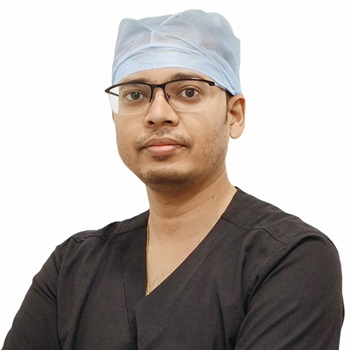
Associate Consultant Dr. Kavach H. Patel brings a background in both general surgery and neurosurgery to Marengo CIMS Hospital, Ahmedabad. He trained in general surgery before specialising in neurosurgery at Goa Medical College, and that grounding in emergency and trauma care shows in the conditions he treats. Problems of the brain and spine are among the most frightening a family can face, because they often arrive suddenly and decisions have to be made quickly. He focuses on explaining what has happened, what the scans show, and what the options are, in plain words, so that patients and families are never left guessing.
Qualifications
- MCh (Neurosurgery), Goa Medical College, Goa (2019 to 2022)
- MS (General Surgery), B.J. Medical College, Civil Hospital, Ahmedabad (2010 to 2013)
- MBBS, B.J. Medical College, Civil Hospital, Ahmedabad (2003 to 2008)
Areas of Expertise
- Head Injury
- Traumatic and Hypertensive Bleed Surgery
- Shunt Surgery
- Cranioplasty
- Brain Tumour Surgery
- Traumatic Spine Surgery
- Spine Fixation Surgery
- Prolapsed Disc Surgery
When Your Search Begins With a Scan
Most families start looking for a neurosurgeon after a scan shows something unexpected: a clot, a swelling, a slipped disc, or a growth. If you are searching for a Brain Surgeon near me in Ahmedabad, the first thing to know is that not every brain or spine problem needs an operation. Many are watched, treated with medicines or managed with physiotherapy, and surgery is advised only when it is likely to help. A good neurosurgeon will tell you honestly which group your problem belongs to.
Brain, Nerves and Spine: Who Does What
A neurologist treats diseases of the brain and nerves mainly with medicines, while a neurosurgeon treats problems that may need an operation, such as bleeding, tumours, fluid build-up, injuries and spinal compression. The two often work together. If you are unsure which doctor to see, a first visit with either one can point you in the right direction. Tell the doctor exactly what symptoms you have, when they started, and whether they are getting worse.
Your First Neurosurgical Consultation
A visit with Dr. Kavach H. Patel begins with a detailed conversation about your symptoms, how and when they started, any recent injury, your medical history, and the medicines you take, especially blood thinners. He will check your alertness, speech, vision, strength, sensation, reflexes, and balance. Your CT or MRI scans are reviewed, and more tests may be suggested. Please bring the actual scan films or discs along with the reports, since the images matter. A family member should come with you, since there is a lot to take in.
Head Injury: What to Watch For
After a blow to the head, a person who seems fine can worsen hours or even days later. Warning signs include a headache that keeps getting worse, repeated vomiting, drowsiness or difficulty waking, confusion, a seizure, weakness or numbness, slurred speech, unequal pupils, clear fluid or blood from the nose or ears, and unusual behaviour. Do not let an injured person sleep alone for the first night without checking on them, and do not give alcohol or sedatives. Anyone with these signs needs urgent hospital care and usually a CT scan. Older adults and people on blood thinners are at higher risk, even after a minor fall.
Bleeding in the Brain
Bleeding inside the skull can follow an injury, or it can happen on its own, most often because of long-standing high blood pressure. Symptoms may include a sudden severe headache, vomiting, weakness on one side, difficulty speaking, drowsiness, or loss of consciousness. A CT scan quickly shows the bleed. Some bleeds are managed with medicines and close monitoring in the ICU, while others need surgery to remove the clot and ease pressure on the brain. Time matters, so do not wait to see if symptoms pass. Controlling blood pressure with regular medicines is the single most important way to lower the risk of a bleed.
Stroke or Bleed, Act FAST
If you notice a face drooping on one side, weakness in an arm or leg, slurred or confused speech, sudden loss of vision, a sudden severe headache, or sudden loss of balance, call for emergency help immediately and note the time symptoms began. Do not give food, water, or medicines on the way. A scan is needed to tell a blocked blood vessel from a bleed, because their treatments are very different.
Fluid on the Brain and Shunt Surgery
Hydrocephalus is a build-up of the fluid that normally cushions the brain and spinal cord. It can affect babies, children, and adults, and may cause a growing head in infants, headaches, vomiting, drowsiness, blurred vision, difficulty walking, or memory problems. A shunt is a thin tube that drains the extra fluid to another part of the body, usually the abdomen. After a shunt, watch for returning headache, vomiting, drowsiness, fever, or redness along the tube, since a shunt can block or become infected, and tell your doctor immediately.
Repairing the Skull With Cranioplasty
After a serious head injury or bleed, part of the skull bone is sometimes removed to give the swollen brain room. Cranioplasty is the operation that later closes that gap, using the patient’s own bone or a special implant. It protects the brain, restores the shape of the head, and can sometimes help with symptoms. The timing is decided by your doctor, and the operation is done once swelling has settled and any infection has cleared. Until then, protect the area, and follow instructions about headgear or avoiding pressure on that side.
Brain Tumours in Plain Words
A brain tumour is a growth inside or around the brain. Some are slow-growing and not cancerous, while others are more aggressive, and some spread from cancers elsewhere in the body. Symptoms depend on where the tumour is, and may include headaches that worsen, seizures, changes in vision, speech or balance, weakness, memory problems and personality changes. Diagnosis usually begins with an MRI. Treatment may include surgery, radiation, medicines or a combination, planned with other specialists. Ask about the aim of the surgery, the risks to speech, movement and thinking, and what to expect afterwards.
Spine Injuries and Fixation Surgery
Falls, road accidents and sports injuries can break or dislocate the bones of the spine and can damage the spinal cord or nerves. After any serious back or neck injury, keep the person still, avoid moving the neck or back, and call for emergency help, unless there is immediate danger. Some stable fractures heal with a brace and rest, while others need spine fixation, in which screws and rods hold the spine steady while it heals. Weakness, numbness, tingling, or loss of control over urine or stool after an injury is an emergency.
Prolapsed Disc and Sciatica
The discs between the bones of the spine act as cushions. A prolapsed, or slipped, disc happens when part of a disc bulges and presses on a nerve, causing back or neck pain that may spread to a leg or an arm, with tingling, numbness or weakness. Most people improve over weeks with rest as advised, medicines, physiotherapy and posture changes. Surgery may be considered when pain is severe and does not improve, when weakness is increasing or when there is loss of bladder or bowel control, which needs urgent attention. Do not delay if any of these appear.
Back and Neck Care Every Day
Keep your weight in a healthy range, stay active with walking and core-strengthening exercises as advised, and avoid sitting in one position for hours. Lift with your knees bent, not your back. Keep your screen at eye level and take short breaks every 30 to 40 minutes. Avoid smoking, which affects the health of the discs. If you have had a back problem before, ask your doctor which exercises are safe for you.
Preparing for Brain or Spine Surgery
Your doctor will explain why surgery is advised, what it involves, what the risks are, what recovery looks like, and what other options exist. Bring all your earlier scans, reports and prescriptions, and share a full list of your medicines, especially blood thinners, aspirin and diabetes medicines, since some must be paused. Tell the team about allergies and earlier anaesthesia reactions. You will be told about fasting and tests beforehand. Ask every question you have, and ask a family member to be present when the consent is explained.
Recovery After Neurosurgery
After surgery, patients are usually watched in an ICU or high-dependency unit, where the team checks alertness, strength, speech and vital signs closely. You will be helped to sit and walk as soon as it is safe, and physiotherapy often begins early. You will be told about wound care, medicines, activity limits, driving and when to return to work. Seizure medicines, if prescribed, should never be stopped suddenly. If you were treated by our renowned Brain Surgeon in Ahmedabad, keep every follow-up visit, since scans and wound checks are part of the plan.
Brain and Spine Symptoms That Cannot Wait
Go to the nearest emergency department straight away for a severe head injury, sudden weakness, trouble speaking, a drooping face, a sudden severe headache, a seizure, repeated vomiting after a head injury, unconsciousness, or loss of control over urine or stool after a back injury. After surgery, contact the team promptly for increasing headache, drowsiness, fever, fluid or redness at the wound, a seizure, new weakness or numbness. Do not wait for an OPD day.
Booking an Appointment
To book a consultation with Dr. Kavach H. Patel at Marengo CIMS Hospital in Ahmedabad, visit during OPD hours from Monday to Friday, 10:00 am to 5:00 pm. Please bring your earlier CT or MRI films, discs and reports, discharge summaries and prescriptions, along with a list of all the medicines and supplements you take.