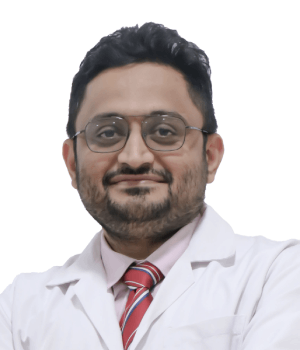
Neurological conditions can affect movement, coordination, muscle control, and everyday activities. Some conditions develop gradually, while others may present with sudden or recurring symptoms that require medical assessment. Accurate diagnosis and appropriate treatment are important for managing these concerns.
As an expert Neurology Doctor in Ahmedabad, Dr. Barad has pursued additional training in movement disorders at Queen Square, London. His training includes experience in deep brain stimulation programming and ward rounds with Professor P. Limousin, as well as botulinum toxin injection training with Professor Carla Cordivari. His academic work and research publications further reflect his involvement in the field of movement disorders.
Qualifications and Specialist Training
- MBBS and MD (Medicine), B. J. Medical College and Civil Hospital, Ahmedabad
- DNB (Neurology), P. D. Hinduja Hospital and Medical Research Centre, Mahim, Mumbai
- Fellowship in Parkinsonism and Movement Disorders with Professor Kailash Bhatia, Queen Square, London
- Deep brain stimulation programming and ward round experience with Professor P. Limousin, Queen Square, London
- Botulinum toxin injection training with Professor Carla Cordivari, Queen Square, London
Areas of Expertise
- Parkinsonism and related movement disorders
- Chorea and other involuntary movement disorders
- Dystonia and dystonia-related symptoms
- Botulinum toxin injections for dystonia and spasticity
- Migraine management
- Deep brain stimulation programming
- Spinal cord stimulation and related procedures
- EMG-guided botulinum toxin procedures for neurological syndromes
Awards and Recognition
Dr. Narendra Barad's professional achievements include contributions to specialised neurological care and movement disorders research.
- Started Gujarat's first deep brain stimulation programme for Parkinsonism, dystonia and other movement disorders.
- Won India's first gold medal in the International Best Video Challenge Competition at MDS, Denmark, in 2021.
- Won Best Case in the Video Akhada competition at MDSICON 2018.
Professional Memberships
Dr. Narendra Barad is associated with the following professional organisations:
- International Parkinson and Movement Disorder Society (MDS)
- Movement Disorders Society of India (MDSI)
- Indian Academy of Neurology (IAN)
- Ahmedabad Medical Association (AMA)
Understanding Movement Disorders
Movement disorders affect the speed, smoothness, and control of voluntary or involuntary movements. They may cause tremors, stiffness, slowness, jerky movements, abnormal postures or difficulty maintaining balance. The symptoms and their progression vary depending on the underlying condition.
Parkinsonism refers to a group of symptoms that can include slowness of movement, stiffness, and tremor. Chorea involves involuntary, irregular movements, while dystonia causes sustained or intermittent muscle contractions that can lead to twisting movements or unusual postures.
A neurological evaluation helps identify the nature of the symptoms and determine whether further investigations or specialised treatment may be appropriate. Consulting a neurologist with training in movement disorders can be particularly helpful when symptoms are complex or affect daily functioning.
Deep Brain Stimulation and Movement Disorders Care
Deep brain stimulation (DBS) is a specialised treatment that involves delivering electrical stimulation to specific areas of the brain through implanted electrodes. It may be considered for selected patients with movement disorders when symptoms are not adequately controlled with medication or when treatment-related fluctuations become difficult to manage.
DBS requires careful patient assessment, treatment planning, and ongoing follow-up. Programming the implanted device is an important part of the treatment process, as settings may need adjustment according to symptom control and individual response.
Dr. Narendra Barad has specialist training in deep brain stimulation programming and experience in this area of neurological care. His involvement in establishing Gujarat's first deep brain stimulation programme for Parkinsonism, dystonia and other movement disorders is among his notable professional achievements.
Botulinum Toxin Injections for Neurological Conditions
Botulinum toxin injections may be used to manage certain neurological conditions involving excessive muscle activity. Depending on the diagnosis, they can help reduce involuntary muscle contractions associated with dystonia and spasticity.
The procedure requires appropriate assessment, selection of injection sites, and individualised dosing. In some cases, electromyography (EMG) guidance may be used to help identify the muscles involved. The suitability of treatment depends on the patient's symptoms, diagnosis, and medical history.
Dr. Barad's training includes botulinum toxin injections at Queen Square, London, and his areas of expertise include EMG-guided procedures for various neurological syndromes.
Conditions Treated
Neurological symptoms can have different causes, making clinical assessment important for determining the appropriate course of care. Based on his stated areas of expertise, Dr. Narendra Barad's practice includes assessment and management related to:
- Parkinsonism and related movement disorders
- Chorea and involuntary movements
- Dystonia and abnormal muscle contractions
- Spasticity
- Migraine
- Other movement-related neurological syndromes
The recommended approach depends on the nature of the symptoms, the underlying diagnosis, and the patient's response to treatment.
Research, Publications and Academic Contributions
Dr. Narendra Barad has contributed to neurological literature through research articles, case reports, review articles, and academic book chapters.
His publications include Syndrome of Tremor, Ataxia, Hearing Loss, and Seizure in a Young Adult: Think Neurobrucellosis, published in Movement Disorders Clinical Practice in 2022. He also authored Jerky Dystonic Tremor: A Less-Recognized Feature of DYT-THAP1, published in Annals of Movement Disorders in 2021.
His other academic contributions include work on Weaver's dystonia, paediatric movement disorders, dystonia, and ATP1A3-related disease. He also contributed a chapter titled An Approach to Dystonia in Essentials of Movement Disorders: A Problem-Based Approach, published by Nova Science Publishers in 2022.
These contributions reflect his academic involvement in understanding movement disorders and their clinical presentations.
Your Consultation with Dr. Narendra Barad
During a neurology consultation, patients can discuss their symptoms, when they began, how they have changed, and whether they affect movement or everyday activities. Previous prescriptions, medical reports, investigation results, and details of ongoing treatment can help provide a clearer picture of the patient's medical history.
For movement-related symptoms, describing the frequency and circumstances of tremors, jerks, or abnormal postures can be useful. Patients should also share information about current medications and any previous neurological procedures. Further evaluation or treatment recommendations will depend on the clinical assessment.
Book an Appointment with Dr. Narendra Barad
If you are looking for an expert Neurology Doctor in Ahmedabad, consult Dr. Narendra Barad at Marengo Asia Hospital for neurological concerns, particularly those related to Parkinsonism, movement disorders, dystonia, and other conditions within his areas of expertise.
To book a consultation, visit during OPD hours from Monday to Wednesday, 10:00 am to 5:00 pm.