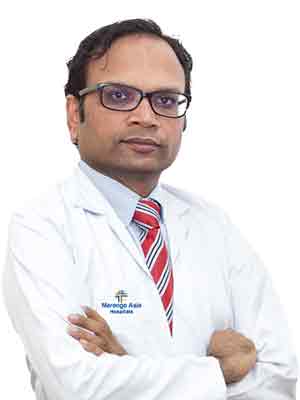
Overview :
Program Clinical Director Dr. Punit Singla brings 25 years of experience to Marengo Asia Hospitals in Faridabad. Having performed more than 2,000 liver transplantations, including complex cases across the full spectrum of HPB surgery, he is recognised as the Best Liver Transplant Surgeon Punit Singla in Faridabad. A liver transplant is one of the biggest decisions a family will ever face, so he takes the time to explain each step, from the first assessment to life after surgery, in plain and honest words.
Qualifications
- MBBS (Dayanand Medical College, Ludhiana, Punjab)
- MS (SPMC, Bikaner, Rajasthan)
- DNB (Surgical Gastroenterology), Sir Ganga Ram Hospital, Delhi
- Liver Transplant Fellowship, Medanta - The Medicity, Gurugram
Areas of Expertise
- Living Donor Liver Transplant
- Minimally Invasive Liver Donor Surgery
- Paediatric Liver Transplant
- Liver Cancer
- HPB Surgery
Professional Memberships
- Indian Association of Surgical Gastroenterology (IASG)
- Association of Surgeons of India (ASI)
- Liver Transplantation Society of India (LTSI)
- International Liver Transplant Society (ILTS)
- AMASI
A Career Built Across India’s Leading Liver Centres
As the Top HPB surgeon in Faridabad, he built his career at some of the country’s best-known liver transplant centres. He began as an Associate Consultant at Medanta - The Medicity, in the Institute of Liver Transplantation and Regenerative Medicine. In 2014, he went on to establish and run the liver transplant programme at Fortis Memorial Research Institute in Gurugram. He has also performed a wide range of liver, HPB and transplant procedures at Jaypee Hospital in Noida, and has worked with several other reputed hospitals across North India.
Building Teams and Training Surgeons
After joining Dayanand Medical College and Hospital, Ludhiana, in 2017, Dr. Singla strengthened the liver transplant team there. Under his leadership, the team set up the first independent living donor liver transplant programme in Punjab and learned to manage even the most difficult cases in both the ICU and the operation theatre. This included adult and paediatric transplants and urgent transplantation for acute liver failure. He has also trained young liver transplant surgeons in living donor surgery and transplant procedures, and has supported liver transplant programmes in other parts of the country.
The Complex Cases He Handles
Not every liver problem is straightforward, and some patients are turned away elsewhere because their case is considered too complex. His experience covers young children who need reduced grafts, living donor transplants with IVC replacement, and transplants where the anatomy is unusual. It also includes ABO-incompatible liver transplants, simultaneous liver and kidney transplantation, split liver transplantation from cadaveric livers, resection of large liver tumours, and urgent or emergency transplants for liver failure. If your case has been described as difficult, bring all your reports and ask for a detailed opinion.
Your First Consultation
A visit with Dr. Punit Singla begins with a detailed conversation about your symptoms, the history of your liver disease, earlier treatments, other illnesses, and the medicines you take. Your reports, scans and blood tests are reviewed carefully, and further tests may be suggested to judge how the liver is working and how fit you are for treatment. You will then hear what the options are, whether a transplant is needed now or later, and what the next steps would be. It helps to bring a family member, since there is a lot of information to take in.
Living Donor Transplant: What Families Should Know
In a living donor transplant, a healthy relative or donor gives part of their liver, and both the donor’s and the patient’s liver parts grow back to a healthy size over time. Donors go through thorough medical and legal checks, and their safety is always the first priority. Donation is a voluntary decision, and no one should feel pressured. Ask the team about the donor assessment, the risks to both donor and patient, the recovery period, and what support is available. Minimally invasive donor surgery may be possible in suitable cases, which your surgeon will discuss with you.
Preparing for Transplant Surgery
Before a transplant, you will have a full set of tests, including blood tests, scans and checks of your heart, lungs and kidneys. A team of specialists, including liver physicians, anaesthetists, nutritionists and nurses, will work together on your plan. Stay as strong as you can by eating as advised, staying active within your limits and avoiding alcohol completely. Take all medicines exactly as prescribed, and keep your phone on and your bag ready if you are on a waiting list. Ask every question you have, since understanding the plan helps you and your family feel steadier.
Life After a Liver Transplant
Recovery begins in the ICU, where patients are watched closely, and then continues in a ward before going home. After a transplant, you will need to take medicines that stop the body from rejecting the new liver, usually for life, so never miss or stop a dose on your own. Regular blood tests and follow-up visits are essential in the first months and beyond. Protect yourself from infection by washing hands often, avoiding crowds when advised, and keeping vaccinations up to date as your team recommends. Most people return to everyday activities over time, and your team will guide you on diet, exercise and work.
Booking an Appointment
To book a consultation with Dr. Punit Singla at Marengo Asia Hospitals in Faridabad, visit during OPD hours from Monday to Saturday, 10:00 am to 2:00 pm. Please bring all your earlier reports, scans, blood tests and prescriptions, along with a list of the medicines and supplements you take.
```