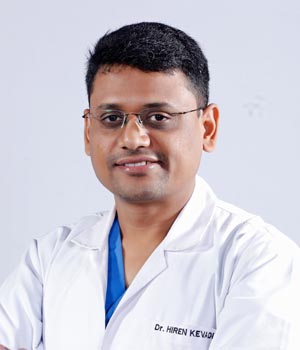
Dr. Hiren T. Kevadiya

Dr Hiren T. Kevadiya

Cardiac Sciences, Cardiology

Cardiologist & Cardiac Electrophysiologist

10+ Years of Experience

Cardiac Sciences , Cardiology

Dr. Hiren T. Kevadiya is a cardiologist and cardiac electrophysiologist at Marengo CIMS Hospital, Ahmedabad, with an MBBS, an MD (Medicine), a DM (Cardiology), and a postdoctoral fellowship in Pacing and Cardiac Electrophysiology. His super specialty is cardiac electrophysiology and pacing, the care of heart rhythm problems.

Available Timings


Monday to Friday, 10:00 am to 4:00 pm Book An Appointment

ABOUT Dr Hiren T. Kevadiya

Overview :

Consultant Dr.  Hiren T. Kevadiya has been in specialist practice since February 2015 and practises at Marengo CIMS Hospital, Ahmedabad. His clinical work covers electrophysiology studies, radiofrequency (RF) ablation of heart rhythm disorders, 3D mapping and the implantation of cardiac rhythm devices. His special interests are physiological pacing, cardiac resynchronisation therapy and the ablation of complex atrial arrhythmias and scar-related ventricular tachycardia. A racing heart, skipped beats, or an unexplained blackout can be deeply unsettling, so he focuses on finding the cause and explaining the options in plain words.

Qualifications

  • MBBS
  • MD (Medicine), B. J. Medical College, Ahmedabad
  • DM (Cardiology)
  • PDF (Pacing and Cardiac Electrophysiology), Sree Chitra Tirunal Institute for Medical Sciences and Technology (SCTIMST), Trivandrum
  • FIHRS

Areas of Expertise

  • Cardiac Arrhythmia Evaluation and Management
  • Electrophysiology Studies and Radiofrequency Ablation
  • 3D Electroanatomic Mapping (EnSite and CARTO)
  • Physiological Pacing (His-Bundle and Left Bundle Branch Pacing)
  • Pacemaker, AICD, CRT-P, CRT-D and ILR Implantation
  • Device Upgrades
  • Complex Atrial Arrhythmias and Scar-Related Ventricular Tachycardia Ablation

Awards and Recognition

  • Excellence in Electrophysiology Award, IHRS Annual Conference, Ahmedabad (October 2017)
  • First prize, Cardiac Pacing and Electrophysiology Quiz, IHRS Kerala Chapter, Calicut (April 2017)
  • Second prize, Intercollegiate Cardiology Quiz on Intensive Case Review, CSI Kerala Chapter, Kochi (March 2017)

Professional Memberships

  • Member, Indian Heart Rhythm Society (IHRS)
  • Fellow, Indian Heart Rhythm Society (FIHRS)
  • Fellow in Pacing and Cardiac Electrophysiology, SCTIMST, Trivandrum (2018)

Medical Registration Number

  • G-41825

Where Rhythm Problems Fit in Heart Care

  • Most people picture heart disease as blocked arteries, but the heart is also an electrical organ. Tiny signals tell it when to beat, and when those signals misfire, the heartbeat can become too fast, too slow, or irregular. A cardiac electrophysiologist is a cardiologist with extra training in diagnosing and treating these rhythm problems. If you are looking for a Heart Specialist in Ahmedabad for palpitations, blackouts, or a slow pulse, this is the sub-specialty that looks at the cause and, where suitable, treats it directly.

Training and Career

  • After his MD in Medicine at B. J. Medical College in Ahmedabad, Dr. Hiren T. Kevadiya completed a DM in Cardiology and then a postdoctoral fellowship in Pacing and Cardiac Electrophysiology at SCTIMST, Trivandrum. He worked at U. N. Mehta Institute of Cardiology and Research Centre from February 2019 to February 2020 and joined CIMS Hospital in March 2020. People searching for the Best Heart Specialist Hiren Kevadiya in Ahmedabad will find a doctor whose training and practice are both centred on heart rhythm care.

Your First Visit

  • A consultation with Dr. Hiren T. Kevadiya begins with a conversation about your symptoms: when they started, how long they last, what triggers them, and whether you have felt faint or blacked out. Your medical history, family history, medicines, tea, coffee, and alcohol habits, and any earlier ECGs are reviewed. An ECG is usually done on the spot, and tests such as a 24-hour or longer rhythm recording, an echocardiogram, blood tests or a treadmill test may be suggested. Try to note the time and what you were doing when symptoms occur, and bring any smartwatch or phone recordings you have.

Palpitations: When a Racing Heart Needs a Check

  • Everyone notices their heartbeat after exercise, fear, or too much coffee. It deserves a check when it comes out of the blue, lasts for minutes or longer, feels very fast or irregular, or arrives with dizziness, breathlessness, chest discomfort, or fainting. Some people feel a pounding heart that starts and stops suddenly, while others feel skipped or extra beats. Do not rely on repeated home remedies or sedatives. A rhythm recording taken during symptoms is often the key to finding the cause.

Rhythm Conditions He Treats

  • The heart rhythm problems he manages include AV nodal re-entrant tachycardia (AVNRT), Wolff-Parkinson-White (WPW) syndrome and other accessory pathway rhythms, atrial flutter and atrial tachycardia, premature ventricular contractions (PVCs), and ventricular tachycardia, both idiopathic and scar-related. He also treats slow rhythms and heart block that need pacing, rhythm problems after surgery for congenital heart disease, and heart failure that needs cardiac resynchronisation therapy. Some of these are harmless and need only reassurance, while others are serious, so a proper diagnosis comes first.

Electrophysiology Study and Ablation: What to Expect

  • An electrophysiology (EP) study is a procedure in which thin, flexible wires are guided through a blood vessel, usually in the groin, to the heart to record its electrical activity and find the source of an abnormal rhythm. If a suitable source is found, radiofrequency (RF) ablation uses heat energy to treat that small area. It is usually done with local anaesthesia and sedation, and patients often go home within a day or two. Your doctor will explain why it is advised, how likely it is to help in your case, what the risks are and what the alternatives are, including medicines and watchful waiting.

3D Mapping for Complex Rhythms

  • For complex rhythm problems, 3D electroanatomic mapping systems, such as EnSite and CARTO, build a detailed colour-coded model of the heart’s electrical activity. This guides the doctor to the exact area to treat, and it is particularly useful in complex atrial arrhythmias and scar-related ventricular tachycardia, for example after earlier heart surgery or a heart attack. Whether mapping is needed depends on your rhythm and your history. Bring all your earlier ECGs, recordings, echo reports, and discharge summaries, since they help plan the procedure.

Pacemakers, ICDs and Other Heart Devices

  • A pacemaker is a small device placed under the skin that keeps the heart from beating too slowly. An implantable cardioverter defibrillator (ICD or AICD) watches for dangerous fast rhythms and can treat them. Cardiac resynchronisation therapy (CRT-P and CRT-D) helps the chambers of the heart work together in some patients with heart failure. An implantable loop recorder (ILR) is a tiny device placed under the skin to record the rhythm for months when symptoms are rare. Existing devices can also be upgraded when your condition changes. Ask why a device is advised, how it works, and what follow-up it needs.

Physiological Pacing: Pacing That Follows the Heart’s Natural Wiring

  • Traditional pacing stimulates the heart from the lower right chamber. In physiological pacing, such as His-bundle pacing and left bundle branch pacing, the pacing wire is placed so the signal travels along the heart’s natural conduction system. Doctors consider it for patients who need a pacemaker, especially when frequent pacing could weaken the heart. It is not right for everyone, and the choice depends on your rhythm, your heart function, and your anatomy, so ask your doctor to explain which option suits you and why.

Fainting and Sudden Collapse

  • Fainting has many causes, and most are not dangerous, such as standing up too quickly, dehydration, long periods of standing, or a sudden fright. But fainting during exercise, with no warning, with palpitations or chest pain, or in someone with heart disease or a family history of sudden death needs prompt assessment. If someone collapses, call for emergency help at once. If they are not breathing normally, begin chest compressions and use a defibrillator if one is available. Tell your doctor about any relatives who died suddenly or young, since this may point to an inherited heart rhythm condition.

Preparing for a Heart Rhythm Procedure

  • Your team will tell you when to stop eating and drinking and which medicines to adjust, especially blood thinners, diabetes medicines and rhythm medicines, so do not stop any on your own. Blood tests, an ECG and sometimes an echocardiogram or scan are done beforehand. Bring all your earlier reports and a list of your medicines and allergies. Arrange for a family member to stay with you and take you home. Ask every question you have beforehand, since knowing the plan helps you feel steadier on the day.

After the Procedure and Living With a Device

  • After a procedure, you rest while the team watches your heart rhythm, blood pressure, and the site of the puncture or incision. You will be told how to care for the wound, when you can bathe, drive and return to work, and what arm movements to avoid after a device is placed. Carry the device identification card you are given, and show it before any scan, surgery, or security check. Keep mobile phones and magnets a safe distance from the device as advised. Attend regular device checks, since they confirm that it is working and check the battery.

Research and Academic Contributions

  • He has 15 publications, including a review on leadless pacemakers in the Kerala Journal of Cardiology (2018) and articles in journals such as Acta Cardiologica, the Journal of Cardiovascular Electrophysiology, Pacing and Clinical Electrophysiology, the Journal of Electrocardiology and the Indian Pacing and Electrophysiology Journal. His academic work includes an oral paper on myocardial scar characteristics and arrhythmic events at APHRS, Bangkok (2019), case presentations on 3D mapping-guided ablation at IHRS, Jaipur (2018), and poster presentations at national and international meetings.

Teleconsultation

  • Teleconsultation is available with Dr. Hiren T. Kevadiya. It can be useful for follow-up, reviewing reports and rhythm recordings, or getting a first opinion before travelling. A video or phone consultation cannot replace an examination or an ECG when one is needed, and he may ask you to come in person. Please keep your reports, ECGs and medicine list ready before the call.

When Heart Rhythm Problems Cannot Wait

  • Go to the nearest emergency department straight away for fainting or collapse, a very fast heartbeat with chest pain, breathlessness or dizziness, a very slow pulse with weakness or confusion, or a heartbeat that does not settle. The same applies after a procedure for bleeding, a swollen, painful puncture site, a device pocket that becomes red, hot, or leaks, fever, or a shock from an ICD that comes with symptoms. People who see the Top Heart Specialist Hiren Kevadiya in Ahmedabad should still treat emergencies as emergencies and not wait for OPD hours.

Booking an Appointment

  • To book a consultation with Dr. Hiren T. Kevadiya at Marengo CIMS Hospital in Ahmedabad, visit during OPD hours from Monday to Friday, 10:00 am to 4:00 pm. Please bring your earlier ECGs, rhythm recordings, echocardiogram reports, discharge summaries, and prescriptions, along with a list of all the medicines and supplements you take.


Enquire Now