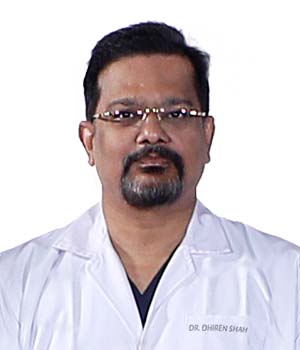
Consultant Dr. Dhiren Shah practises at Marengo Asia Hospital in Ahmedabad, and treats people whose hearts need an operation, from bypass surgery and valve repair to transplant. He is also a member of an ICMR committee and of the working committee for transplantation of the Government of Gujarat. Being told that a heart needs surgery turns a household upside down, and families often arrive with a pile of reports and a head full of questions. He puts effort into explaining what is wrong, what the options are, and what each one involves, in plain words and with the family in the room.
Qualifications
- MS (General Surgery)
- MCh (Cardiothoracic and Cardiac Surgery)
Areas of Expertise
- Heart Transplant
- Heart Failure
- Valve Surgery
- Complex Bypass Surgery
- Heart and Lung Surgeries
- Congenital Heart Disease
Committee Memberships
- Member, ICMR Committee
- Member, Working Committee for Transplantation, Government of Gujarat
Heart Specialist or Heart Surgeon
Many families begin by looking for a Heart Specialist in Ahmedabad and are then unsure which doctor they need. A cardiologist diagnoses heart problems and treats most of them with medicines, tests, and procedures done through thin tubes. A heart surgeon is the doctor who operates when surgery is likely to help more than other treatments. Dr. Shah is a heart surgeon, so patients usually reach him after a cardiologist has advised an operation or a second opinion on one. If you are not sure which of the two you need, a first visit with your reports can settle it.
Why Transplant Committees Matter to Patients
Organ transplantation in India follows rules about who can donate, how donors are checked, and how organs are allocated. Serving on a government working committee for transplantation means taking part in those discussions as well as operating. For a patient, it means that the surgeon knows the legal and ethical framework well and can explain it. The ICMR committee role is similar, since the council guides medical research and standards across the country. Ask your doctor about the process, so there are no surprises.
Your First Meeting With the Surgeon
A consultation with Dr. Dhiren Shah begins with a conversation about your symptoms, how long you have had them, your medical history, your diabetes, blood pressure and smoking, and the medicines you take. He will examine you and go through your angiogram, echo, ECG, and blood reports. Further tests may be suggested before any decision. Please bring the actual angiogram discs or films as well as the reports, your earlier discharge summaries, and a family member who can listen with you.
When a Heart Specialist Is Worth Seeing Early
If you have typed Heart Specialist near me in Ahmedabad into a search box after chest discomfort, breathlessness or a worrying test result, do not wait for the pain to become severe. Chest pressure with effort, breathlessness that is new, swelling of the feet, palpitations, fainting and unusual tiredness are all reasons to be seen soon. Early assessment often gives more treatment choices, and many people need only medicines. If surgery is needed, there is more time to plan it well.
A Heart That Is Tiring Out
Heart failure means the heart is not pumping as well as the body needs. It can follow earlier heart attacks, valve disease, long-standing high blood pressure, or diseases of the heart muscle. Signs include breathlessness, trouble lying flat, swelling in the legs, quick weight gain, and tiredness. Most people are managed with medicines, less salt, fluid advice, and regular follow-up. When the heart stays very weak despite the best treatment, advanced options such as heart support devices or a transplant are considered. Tell your doctor early if breathlessness worsens.
Heart Transplant, What Families Should Know
A heart transplant is considered when the heart is failing, and other treatments are no longer enough. It needs a full assessment of the heart and the rest of the body, a suitable donor heart, and a strong support system at home. Transplants in India follow a legal process, including approvals and donor allocation rules. After the operation, medicines to prevent rejection are needed for life, with regular tests and follow-up visits. If you or a family member might need a transplant, ask early about the assessment and what lies ahead.
Complex Bypass Surgery
When the arteries that feed the heart muscle are badly narrowed, blood flow falls, which can cause chest pain, breathlessness or a heart attack. Coronary artery bypass grafting (CABG) creates new routes around the blockages using vessels taken from the chest wall, the arm or the leg. Surgery is often discussed when several arteries are blocked, when the main artery is involved, when the heart is weak, or when a patient has diabetes. Ask why bypass is advised over a stent or medicines, what the risks are, and what recovery will look like.
Heart Valves That Narrow or Leak
The heart has four valves that open and close with every beat. A narrow valve makes the heart work harder, and a leaking one lets blood flow backwards. Symptoms include breathlessness, tiredness, swelling of the feet, palpitations, chest discomfort, and fainting. Mild problems are watched with regular echo tests. When surgery is advised, the valve may be repaired where possible or replaced with a mechanical or tissue valve. Mechanical valves need blood-thinning medicine for life, so ask about the benefits and limits of each type.
Operations on the Heart and Lungs Together
The heart and lungs sit side by side and share the same blood supply, so a problem in one often affects the other. Some operations involve both, for example, when a growth or infection involves the chest or when severe lung disease and heart disease occur together. These cases need careful planning with a team, including a lung specialist and an anaesthetist. If you have both heart and lung problems, ask for all your reports to be reviewed together.
Heart Conditions Present From Birth
Congenital heart disease means a problem with the heart’s structure from birth, such as a hole between chambers or a narrowed or misplaced vessel. Signs in babies include fast breathing, poor feeding, sweating with feeds, poor weight gain, or a bluish colour. Some children are diagnosed before birth or soon after, while others are found in childhood or even adult life. Treatment depends on the condition and may involve medicines, a procedure through a blood vessel or an operation. Early assessment with a paediatric heart team gives the best chance of protecting the child’s health.
Preparing for Heart Surgery
Your doctor will explain why surgery is advised, what it involves, what the risks are and how long recovery will take. Before the operation, you will have blood tests, an ECG, an echo, a chest check and an anaesthesia assessment. Bring all your earlier reports and a full list of your medicines, especially blood thinners, aspirin and diabetes medicines, since some must be adjusted. Stopping smoking, even a few weeks beforehand, lowers the risk of complications. Practise deep breathing and arrange help at home for the first weeks.
Waking Up in the Cardiac ICU
After heart surgery, you are cared for in a cardiac ICU, where monitors track the heart rhythm, blood pressure, oxygen, and breathing around the clock. Tubes, drips, and drains each serve a purpose and are removed as you improve. Most patients are helped to sit and walk within a day or two, and breathing exercises are important for the lungs. Ask the team how often updates are given, and nominate one family member to receive them.
Getting Back to Normal Life
Recovery continues for weeks after discharge. You will be told how to look after the wound, how to protect the breastbone while it heals, when to start walking and when you can return to work, drive and resume normal activities. Take your medicines exactly as prescribed, and never stop blood thinners on your own. Ask about cardiac rehabilitation, a supervised programme of exercise and education. If you were treated by Dr. Dhiren Shah, keep every follow-up visit, since tests and medicine changes are planned around them.
Heart Symptoms That Cannot Wait
Go to the nearest emergency department straight away for chest pain or pressure lasting more than a few minutes, severe breathlessness, fainting, sudden tearing pain in the chest or back, a very fast or irregular heartbeat with dizziness, or sudden weakness on one side or trouble speaking. After surgery, contact the team promptly for fever, redness or discharge from the wound, a clicking or moving breastbone, increasing breathlessness, rapid weight gain with swelling, or chest pain. Do not wait for an OPD day.
Booking an Appointment
To book a consultation with Dr. Dhiren Shah at Marengo Asia Hospital in Ahmedabad, visit during OPD hours from Monday to Wednesday, 9:30 am to 5:30 pm. Please bring your earlier ECGs, echo reports, angiogram discs and reports, discharge summaries and prescriptions, along with a list of all the medicines and supplements you take.