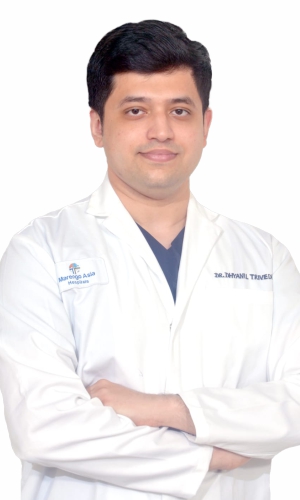
Consultant Dr. Dhyanil Trivedi has 8 years of experience in heart and vascular surgery and practises at Marengo Asia Hospital in Ahmedabad. He trained through the direct six-year DrNB course at Narayana Hrudayalaya, which means his entire surgical training has been in heart and chest surgery. When a doctor says the word “operation” about the heart, families go quiet and then ask everything at once. Heart Surgeon Dhyanil Trivedi in Ahmedabad makes room for those questions, and he explains what is wrong, what the choices are, and what each one involves, in plain words.
Qualifications
- MBBS, Government Medical College, Baroda (SSG Hospital)
- DrNB (Cardiothoracic and Vascular Surgery), Narayana Hrudayalaya, Bengaluru (direct six-year course)
Areas of Expertise
- Adult Cardiac Surgery
- Coronary Artery Bypass Grafting (CABG)
- Minimally Invasive Cardiac Surgery
- Valve Repair and Replacement Surgery
- Aortic Surgery, including Bentall Surgery
- Adult Congenital Heart Surgery
- Vascular Surgery
- ECMO
- LVAD Insertion
- Heart Transplant
Professional Memberships
- Indian Association of Cardiovascular and Thoracic Surgeons (IACTS)
- INSHLT
Medical Registration Numbers
Research
- Outcomes of the Ross procedure in the paediatric population of a tertiary care hospital
Finding the Surgeon After a Cardiologist’s Advice
Most people reach a heart surgeon after seeing a cardiologist, who has done an ECG, an echo, or an angiogram and found something that may need an operation. If you have typed Heart Surgeon near me in Ahmedabad into a search box after such a visit, bring those reports and the actual angiogram discs to the consultation. The surgeon will go through them with you and tell you honestly whether surgery is needed, whether it can wait, and what the alternatives are, including medicines and stents.
What Your First Consultation Covers
A consultation with Dr. Dhyanil Trivedi begins with a conversation about your symptoms, how long you have had them, your medical history, your diabetes, blood pressure and smoking, and the medicines you take. He will examine you and review your angiogram, echo, ECG, and blood reports. More tests may be suggested before any decision is made. Please bring a family member, since there is a lot to take in, and your earlier discharge summaries.
Blocked Arteries and the Bypass Question
When the arteries that feed the heart muscle become narrow, the heart gets less blood, which can cause chest pain, breathlessness or a heart attack. In coronary artery bypass grafting (CABG), the surgeon creates new routes around the blockages using vessels from the chest wall, the arm or the leg. Whether you need bypass, a stent, or medicines depends on where the blockages are, how many arteries are affected, how well the heart pumps, and whether you have diabetes. Ask why one option is advised over the others.
Valves That Narrow or Leak
Four valves keep blood flowing in one direction through the heart. A narrow valve forces the heart to work harder, and a leaking one lets blood slip backwards. Symptoms include breathlessness, tiredness, swelling of the feet, palpitations and fainting. Mild problems are watched with regular echo tests. When surgery is advised, a valve may be repaired where possible, since this can protect the heart’s own tissue, or replaced with a mechanical or tissue valve. Mechanical valves need blood-thinning medicine for life, so ask about the trade-offs.
When the Main Artery Swells
The aorta is the body’s largest artery. An aneurysm is a bulge in its wall that can grow silently, and a dissection is a tear in the inner lining that needs emergency care. Sudden severe tearing pain in the chest or back, with sweating or fainting, should never be ignored. Surgery such as the Bentall operation replaces a diseased aortic valve and the section of aorta above it in one procedure. High blood pressure, smoking, and a family history raise the risk, so ask about screening if relatives have had aortic problems.
Smaller Cuts for the Heart
Minimally invasive heart surgery uses smaller openings between the ribs, instead of cutting through the breastbone, for suitable operations such as some bypass procedures, valve repairs and closure of a hole in the heart (ASD). For the right patient, it may mean less pain, a smaller scar and a quicker return to normal life. It does not suit everyone, and sometimes the standard approach is safer. Ask whether it is an option in your case and what the advantages and limits would be.
Holes in the Heart and Other Problems From Birth
Some people reach adulthood with a heart condition that was present from birth, such as a hole between the upper chambers, a narrowed valve or an unusual connection of vessels. It may have been missed in childhood, or treated earlier and now needs a review. Signs include breathlessness, tiredness, palpitations or a bluish colour. Adult congenital heart disease needs a surgeon and a cardiologist who understand it, so bring any childhood records you have. In children, operations such as the Ross procedure, which uses the patient’s own valve, are sometimes considered.
A Heart That Needs Extra Support
In heart failure, the heart cannot pump as well as the body needs. Most people are managed with medicines, less salt, fluid advice, and regular follow-up. When the heart stays very weak despite the best treatment, advanced options are considered. ECMO is a machine that takes over the work of the heart and lungs for a while, and an LVAD is a pump that helps a weak heart push blood around the body. In selected patients, a heart transplant may be the answer. These treatments need a highly trained team, and families should ask what each one aims to do and for how long.
Heart Transplant and Pump Support, What Families Should Know
A transplant is considered when the heart is failing, and other treatments are no longer enough. It needs a full assessment, a suitable donor heart, and a strong support system at home. Transplants in India follow a legal process, including approvals and donor allocation rules. After the operation, anti-rejection medicines are needed for life, with regular tests. If you or a family member might need a transplant or a pump, ask early about the assessment and what life will look like afterwards.
Vascular Problems Beyond the Heart
Blood vessels outside the heart can also narrow, weaken or clot. Leg pain when walking that eases with rest, cold or pale feet, slow-healing foot wounds, swollen veins and sudden swelling in one leg are all worth getting checked. Smoking, diabetes, high blood pressure and high cholesterol raise the risk. Many people improve with medicines, walking exercises and lifestyle changes, and some need a procedure or surgery. Do not keep taking painkillers and cut down on walking.
Getting Ready for Heart Surgery
Your doctor will explain why surgery is advised, what it involves, what the risks are, and how long recovery will take. Before the operation, you will have blood tests, an ECG, an echo, a chest check and an anaesthesia assessment. Bring all your reports and a full list of your medicines, especially blood thinners, aspirin and diabetes medicines, since some must be adjusted. Stopping smoking, even a few weeks beforehand, lowers the risk of complications. Practise deep breathing and arrange help at home for the first weeks.
The First Days After Surgery
After heart surgery, you are cared for in a cardiac ICU, where monitors follow the heart rhythm, blood pressure, oxygen, and breathing around the clock. Each tube, drip, and drain has a purpose and is removed as you improve. Most patients are helped to sit up and walk within a day or two, and breathing exercises protect the lungs. Ask the team how often updates are given, and nominate one family member to receive them.
Recovering at Home
Recovery goes on for weeks after discharge. You will be told how to look after the wound, how to protect the breastbone while it heals, when to start walking and when you can return to work and drive. Take your medicines exactly as prescribed, and never stop blood thinners on your own. Ask about cardiac rehabilitation, which is a supervised programme of exercise and education. If you were treated by Dr. Dhyanil Trivedi, keep every follow-up visit, since tests and medicine changes are planned around them.
Symptoms That Cannot Wait
Go to the nearest emergency department straight away for chest pain or pressure lasting more than a few minutes, severe breathlessness, fainting, sudden tearing pain in the chest or back, a very fast or irregular heartbeat with dizziness, or sudden weakness on one side or trouble speaking. After surgery, contact the team promptly for fever, redness or discharge from the wound, a clicking or moving breastbone, increasing breathlessness, rapid weight gain with swelling, or chest pain. Do not wait for an OPD day.
Booking an Appointment
To book a consultation with Dr. Dhyanil Trivedi at Marengo Asia Hospital in Ahmedabad, visit during OPD hours from Monday to Saturday, 9:00 am to 5:00 pm. Please bring your earlier ECGs, echo reports, angiogram discs and reports, discharge summaries and prescriptions, along with a list of all the medicines and supplements you take.