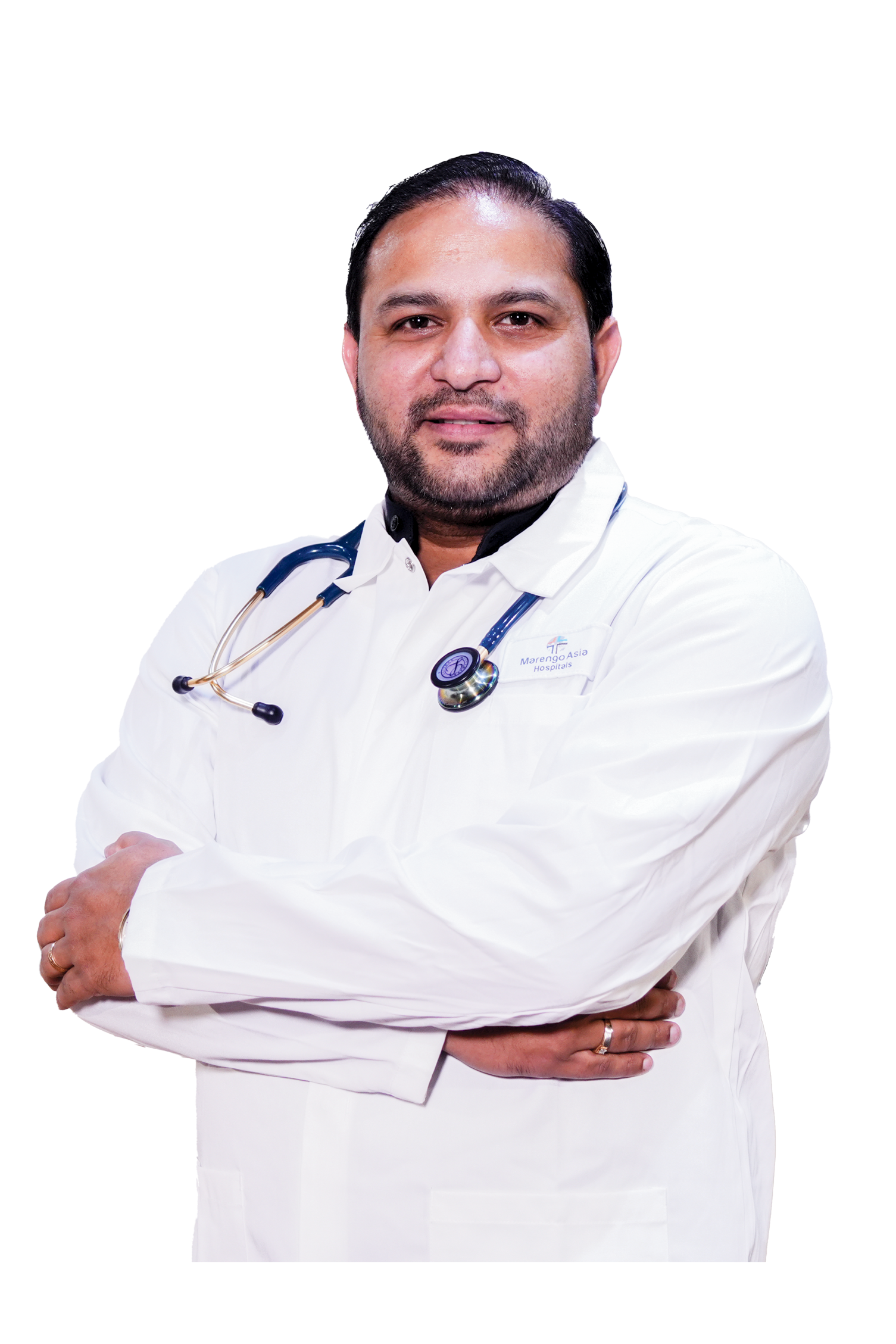
Top medical oncologist Dr. Yogesh Sharma combines training in cancer therapy with critical care medicine. His work includes systemic cancer treatment, the management of oncology emergencies, and intensive care support for patients with cancer. He has worked in chemotherapy day-care units and in settings that support bone marrow transplantation programmes.
Qualifications
- Fellowship in Medical Oncology (USA)
- Certificate Training Course in Critical Care Medicine (CTCCM), FIMS Hospital, Sonipat, under the aegis of the Indian Society of Critical Care Medicine (ISCCM)
- Fellowship in Critical Care Medicine, Indraprastha Apollo Hospital, New Delhi
- Comprehensive Critical Care Course (4C)
- MBBS, Pt. B. D. Sharma Postgraduate Institute of Medical Sciences (PGIMS), Rohtak, Haryana
- ACLS and BLS Certification (American Heart Association)
Areas of Expertise
- Systemic Cancer Therapy
- Chemotherapy, Targeted Therapy, Immunotherapy and Hormonal Therapy
- Monoclonal Antibody Therapy
- Haematological Malignancies
- Oncology Critical Care and Oncological Emergencies
- ICU Management of Cancer Patients
Work Experience
- Associate Consultant: Medical Oncology at Marengo Asia Hospitals
- Critical Care and Emergency Physician, Bhagwan Das Hospital, Sonipat (January 2022 – December 2022)
- Faculty, Department of Pharmacology, West Kazakhstan Marat Ospanov State Medical University, Aktobe, Kazakhstan (about two years)
- Trauma ICU Fellowship Training and Neurology Clinical Fellowship Training, PGIMS Rohtak
Memberships
- European Society for Medical Oncology
- Indian Society of Critical Care Medicine
- Educational Society of Bedside Intensive Care Medicine
- Indian Medical Association
- Haryana Medical Association
Training and Conferences
- Preventive Oncology Training Programme, Rajiv Gandhi Cancer Institute & Research Centre, Delhi
- Oncology Scientific Training Programme, MSN Laboratories R&D Centre, Hyderabad
- NECCECON, Critical Care and Emergency Medicine Conference, AIIMS Guwahati
- ICU Practical Conference, Artemis Hospital, Gurugram
- Airway and Mechanical Ventilation Workshop, Mata Chanan Devi Hospital, New Delhi
- Obstetrical Emergencies and Critical Care Conference, Sir Ganga Ram Hospital, New Delhi
Cancer Treatment With Medicines
Systemic therapy treats cancer with medicines that act throughout the body. Chemotherapy destroys rapidly dividing cells. Targeted therapy acts on specific features of cancer cells, immunotherapy helps the body’s defences recognise cancer, and hormonal therapy lowers the effect of hormones that feed some cancers. Which treatment suits you depends on the type and stage of the cancer, the tumour’s test results and your overall health. Your doctor explains the aim, the schedule and the possible side effects before treatment starts.
When Cancer Treatment Becomes an Emergency
Some complications need urgent care. Fever with chills during chemotherapy can signal a serious infection because the body’s defences are low, and it needs immediate assessment. Other warning signs include uncontrolled vomiting, severe diarrhoea, bleeding, breathlessness, confusion, severe pain, swelling of an arm or leg and sudden weakness. Go to the nearest emergency department at once and tell the team that you are on cancer treatment.
Critical Care for People With Cancer
Patients with cancer may need intensive care because of a severe infection, a treatment complication, a blockage, or organ failure. Intensive care can include help with breathing, medicines to support blood pressure, close monitoring and treatment of the underlying cause. Needing intensive care does not mean cancer treatment must stop. The team plans next steps with the oncologist and the family.
Blood Cancers
Blood cancers such as leukaemia, lymphoma and myeloma affect the blood, bone marrow and lymph nodes. Possible warning signs include persistent tiredness, fever, night sweats, unexplained weight loss, painless swelling in the neck, armpit or groin, easy bruising and frequent infections. Most of these symptoms have other causes, but they need evaluation if they continue.
Staying Well During Treatment
Tell your team early about side effects such as nausea, mouth sores, tiredness, or skin changes, since many can be prevented or eased. Eat as well as you can, drink enough fluids, avoid crowds and sick contacts when your blood counts are low, and take medicines exactly as prescribed. Keep the hospital’s emergency contact number with you, and do not take new medicines or supplements without asking.
Preparing for Your First Visit
Bring biopsy reports, scans, blood tests, prescriptions, and a list of every medicine and supplement you take. Note your symptoms, when they began, and any previous treatment. Write down your questions, and bring a family member who can listen and take notes.
Appointments With Dr. Yogesh Sharma
To arrange a consultation with the best medical oncologist Dr. Yogesh Sharma in Faridabad, contact Marengo Asia Hospitals in Faridabad, and bring your reports so that the first discussion can start from the full picture. OPD Timing: Monday to Saturday , 11:00 AM - 06:00 PM