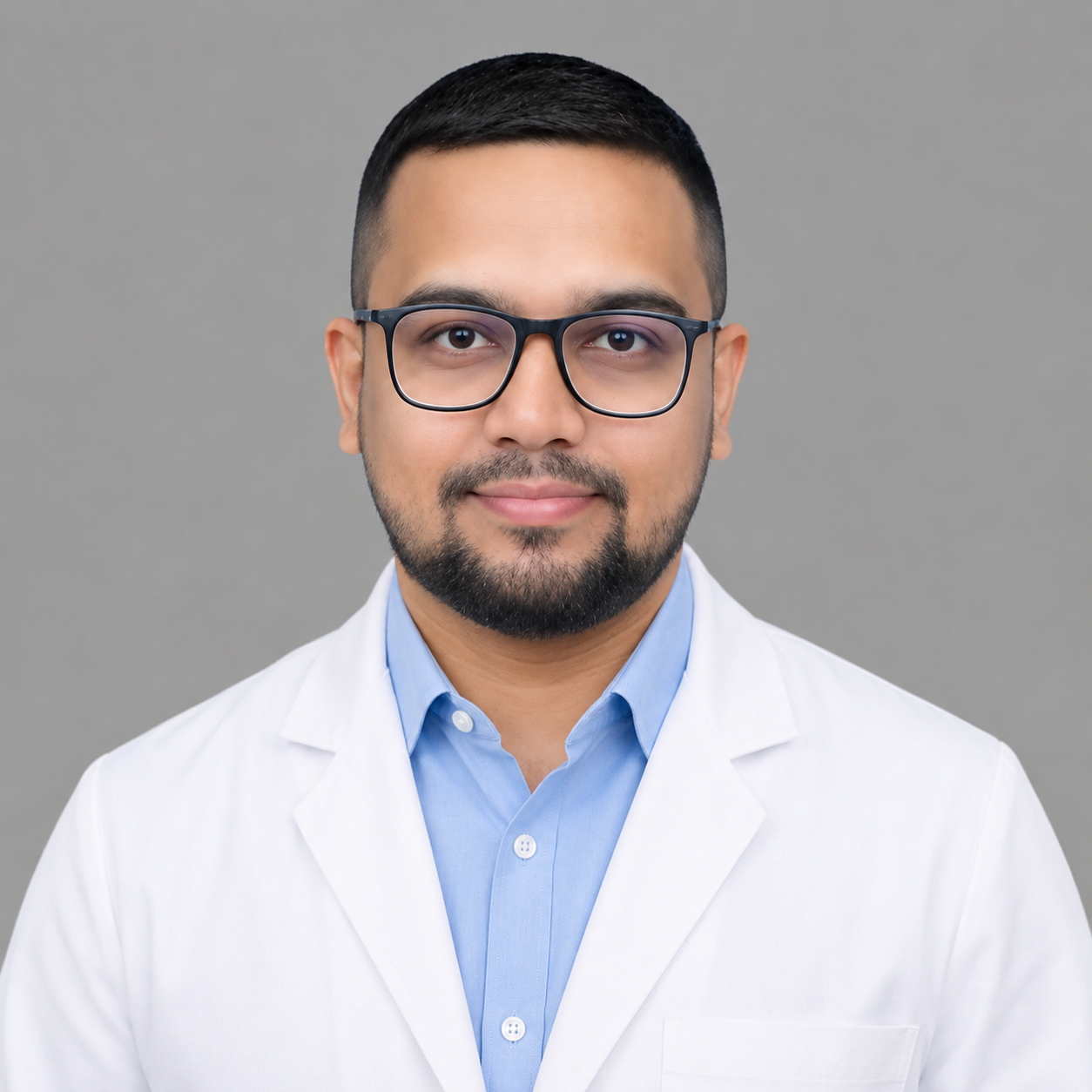
For neurological care in the city, Dr. Varoon Vadodariya is a super-specialist consultant with 2.5 years of experience, practising at Marengo Asia Hospitals in Vadodara. He holds an MBBS, an MD in General Medicine, and a DrNB in Neurology. He focuses on diagnosing and managing disorders of the brain, spinal cord, and nerves, with a clear explanation of the findings and a plan that suits each patient.
Qualifications
- DrNB (Neurology)
- MD (General Medicine)
- MBBS
Areas of Expertise
- Diagnosis of Neurological Disorders
- Management of Neurological Disorders
Work Experience
- Superspecialist Consultant – Neurology, Marengo Asia Hospitals, Vadodara
When to See a Neurologist
A visit to a neurologist in Vadodara is advisable when symptoms point to the brain, spinal cord, or nerves. These include recurrent or severe headaches, dizziness, fainting, seizures, numbness or tingling, weakness in an arm or leg, tremors, difficulty walking, trouble with speech, memory loss and unexplained changes in behaviour. A neurologist takes a detailed history, examines your nerve function and advises tests only where they are needed. Many neurological conditions respond well to treatment when they are found early.
Stroke: Recognise the Signs and Act Fast
A stroke happens when blood flow to part of the brain is blocked, or a blood vessel bleeds. Think FAST: Face drooping on one side, Arm weakness, Speech difficulty, and Time to call for emergency help. Other signs include sudden numbness, confusion, loss of vision, severe dizziness, or a sudden severe headache. Every minute counts, so go to the nearest hospital immediately and note the time symptoms began. Do not wait to see if it passes. Controlling blood pressure, diabetes, and cholesterol, avoiding tobacco, and staying active lower the risk.
Headache and Migraine
Most headaches are harmless, but some need evaluation. Migraine typically causes a throbbing headache on one side, often with nausea and sensitivity to light and sound, and it can last for hours. Triggers include irregular sleep, skipped meals, stress, and certain foods. Keep a diary of attacks to help your doctor, and avoid overusing painkillers, which can worsen headaches. Seek urgent care for a sudden severe headache, headache with fever and a stiff neck, weakness, confusion, or vision loss.
Epilepsy and Seizures: What to Do
Epilepsy is a condition in which the brain produces repeated seizures. During a seizure, stay calm, move hard objects away, place something soft under the head, and turn the person onto their side once the shaking stops. Do not put anything in the mouth or hold the person down. Note the time, and call for emergency help if the seizure lasts more than five minutes, repeats, or the person does not recover. Most people with epilepsy can control their seizures with treatment, and regular medicines must never be stopped suddenly.
Numbness, Tingling and Nerve Weakness
Numbness, burning, tingling or weakness in the hands and feet may arise from nerve damage, called neuropathy. Common causes include diabetes, vitamin B12 deficiency, alcohol, some medicines, and pressure on a nerve, as in carpal tunnel syndrome or a slipped disc. Finding the cause matters, because treating it can prevent the problem from worsening. Seek prompt care for sudden weakness, loss of bladder or bowel control, or numbness that spreads quickly.
Memory Problems and Dementia
Occasional forgetfulness is normal, but see a doctor if memory loss disrupts daily life, such as repeatedly asking the same questions, getting lost in familiar places, struggling with familiar tasks, or changes in mood and personality. Causes include dementia, but also thyroid problems, vitamin deficiencies, depression, and some medicines, and some are treatable. Early assessment helps families plan support and care. Bring a family member who can describe the changes they have seen.
Finding a Neurology Specialist in Vadodara
When looking for a neurology specialist in Vadodara, check the doctor's qualifications and years of practice, which are listed on this page. A DrNB in Neurology is a super-specialty qualification in the field. Ask what is suspected, which tests are needed and why, and what the treatment plan involves. A second opinion for a complex neurological diagnosis is reasonable.
Preparing for Your Visit
Bring earlier reports, scans such as MRI or CT, and prescriptions, together with a list of every medicine you take. Note your symptoms, when they began, how often they occur, and what triggers them. For seizures or fainting, a family member who witnessed an episode can describe it, and a phone video can help. Mention any family history of neurological illness.
Evening Consultations With Dr. Varoon Vadodariya
Appointments with Dr. Varoon Vadodariya are held in the evening, from 7:00 PM to 8:00 PM, Monday to Friday, at Marengo Asia Hospitals in Vadodara. As the slot is short, contact the hospital in advance to arrange your visit, and bring your scans and reports so that the first discussion can start from the full picture.
```