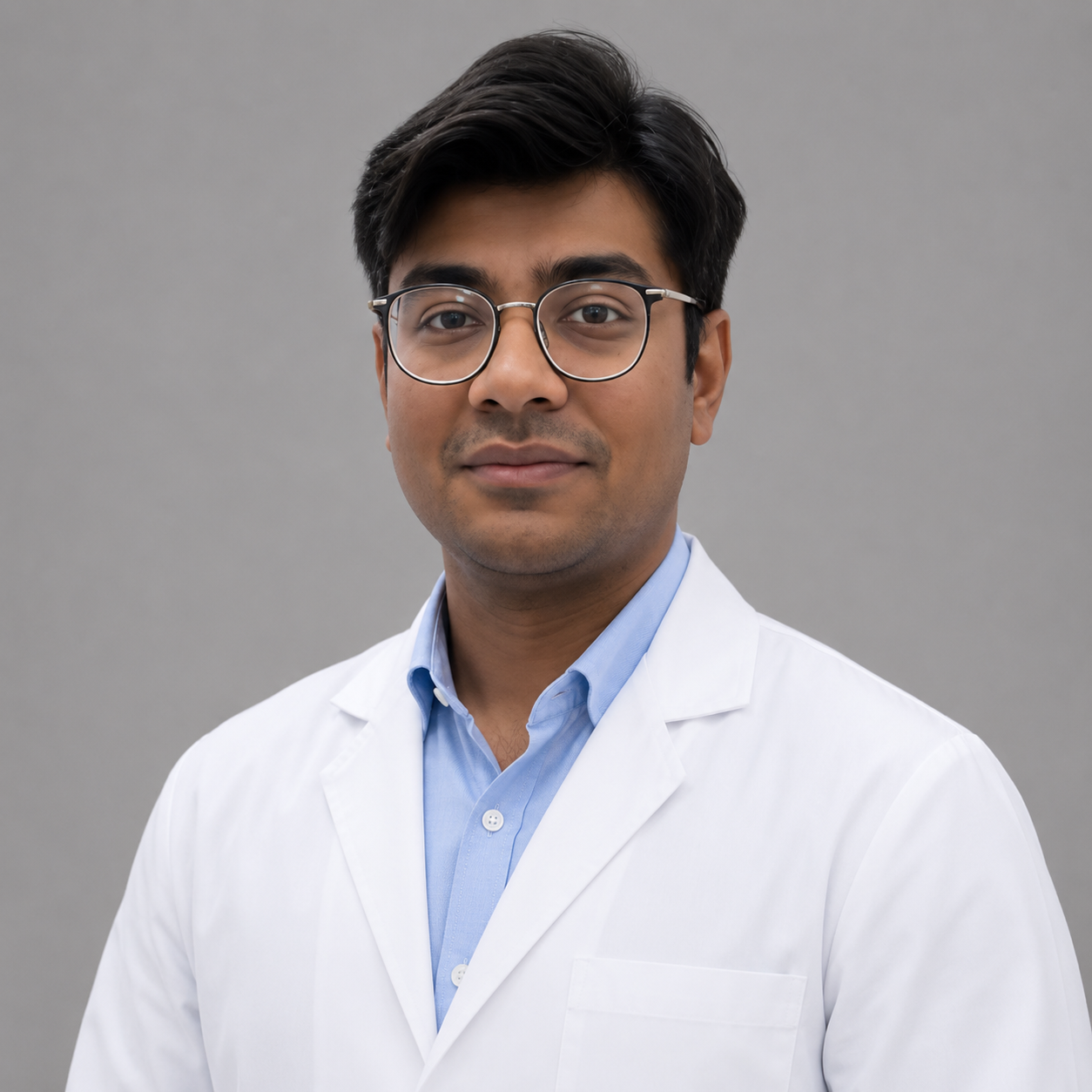
Superspecialist Consultant Dr. Rutvij Shah Vascular Surgeon in Vadodara brings 3 years of experience in vascular surgery, following his training in general surgery and super-specialisation in vascular surgery. He sees patients with problems of the blood vessels, from leg pain and swollen veins to wounds that will not heal. Circulation problems often develop quietly and are easy to put down to age or tiredness, so he focuses on finding the cause early and explaining the options in plain words.
Qualifications
- MBBS
- MS (General Surgery)
- DrNB (Vascular Surgery)
Areas of Expertise
- Vascular Surgery
- Diagnosis of Arterial and Venous Conditions
- Surgical Management of Blood Vessel Disease
Why Blood Vessels Deserve Attention
Arteries carry blood from the heart to every part of the body, and veins bring it back. When either is narrowed, blocked, weakened, or damaged, the tissues they serve can suffer, most often in the legs and feet but also in the neck, abdomen, and arms. These problems are more common in people with diabetes, high blood pressure, high cholesterol, a smoking habit, or a family history of vessel disease. If you are searching for a Vascular Surgeon in Vadodara, this is the doctor who looks after the whole network of vessels outside the heart and brain.
Meeting Your Vascular Surgeon
A first visit with Dr. Rutvij Shah Vascular Surgeon begins with a conversation about your symptoms, how long you have had them, how far you can walk before pain begins, your medical history, your smoking, and your medicines. The doctor will check the pulses in your legs and feet, look at the skin, nails and any wounds, and examine your veins. Tests such as a Doppler ultrasound, a CT angiogram, or blood tests may be suggested. Bring your earlier reports and scans, and wear clothing that lets your legs be examined easily.
Leg Pain That Comes and Goes
Pain, cramping or heaviness in the calf or thigh that appears when you walk and eases with rest can be a sign of narrowed leg arteries, not simply tiredness or age. Other clues include cold, pale or bluish feet, hair loss on the legs, toenails that grow slowly and sores that take weeks to heal. Do not keep taking painkillers and cutting down on walking. An early check can help protect the limb, and many people can be helped with medicines, exercise and lifestyle changes before surgery is ever needed.
Swollen, Heavy or Twisted Veins
Varicose veins appear as twisted, bulging veins, often with aching, heaviness, itching or swelling in the legs, which usually worsens by evening. Over time, some people develop skin darkening, eczema or ulcers near the ankle. Raising the legs, walking regularly, avoiding standing for long hours and, where advised, wearing compression stockings can help. Seek advice if you notice skin changes, sores or sudden swelling, since these may need treatment and tests to find the cause.
Diabetes and the Foot
People with diabetes can have poor circulation and reduced feeling in the feet at the same time, so a small injury can go unnoticed and turn into a serious wound. Check your feet every day, including between the toes, wash and dry them well, and never walk barefoot. Wear well-fitting shoes, do not cut corns or calluses yourself, and keep blood sugar under control. Any blister, cut, colour change or wound that is not healing within days deserves a medical check without delay.
Neck Arteries, the Aorta and Other Vessel Problems
Vascular disease is not limited to the legs. Narrowing of the arteries in the neck can raise the risk of stroke, and a weakening or bulge in a large vessel such as the aorta can develop without symptoms for years. Risk is higher with smoking, high blood pressure, high cholesterol and a family history of such problems. Regular check-ups, blood pressure and cholesterol control and stopping smoking all lower the risk. Ask your doctor whether a screening scan makes sense for you.
Blood Clots and Swollen Limbs
A sudden swelling, pain, warmth or redness in one leg or arm can be caused by a blood clot in a deep vein. Long journeys, bed rest, recent surgery, injury, some medicines and certain illnesses raise the risk. Do not massage the area, and see a doctor urgently. If a clot travels to the lungs, it can cause chest pain and breathlessness, which is an emergency. Drinking enough water, walking regularly on long journeys and moving your legs during bed rest help to lower the risk.
If Surgery Is Advised
Your doctor will explain why it is needed, what it involves, what the risks are and what other options exist, including medicines, exercise and less invasive procedures. Bring all your earlier reports, scans and prescriptions, and share a full list of your medicines, especially blood thinners, aspirin and diabetes medicines, since some may need to be adjusted. Stopping smoking before surgery helps healing and lowers complications. You will be told about fasting and tests beforehand. Ask every question you have, so you feel steady on the day.
Healing and Staying on Track
After a vascular procedure, you are watched closely in a recovery area, with checks on the pulses, colour and warmth of the limb and on the wound. You will be told how to care for the wound, when to start walking, how to raise your leg and when you can return to work. Take your medicines exactly as prescribed, since many people need blood thinners or cholesterol medicines long term. Stopping smoking and walking regularly are among the most useful things you can do. If you were treated by Dr. Rutvij Shah, keep every follow-up visit, since repeat scans may be needed to check how the vessels are doing.
Warning Signs That Cannot Wait
Go to the nearest emergency department straight away for a sudden painful, pale, cold or numb limb, sudden weakness or trouble speaking, a very painful swollen leg, chest pain or breathlessness, severe abdominal or back pain with dizziness, or heavy bleeding. After a procedure, contact the team promptly for increasing pain, swelling, bleeding or discharge from the wound, fever, or a leg or foot that becomes cold or changes colour. Do not wait for an OPD day.
Booking an Appointment
Dr. Rutvij Shah Vascular Surgeon in Vadodara sees patients in the OPD on Monday, Wednesday, and Friday, 5:00 pm to 6:00 pm. Please bring your earlier reports, Doppler or CT scan reports, prescriptions, and a list of all the medicines and supplements you take, and wear comfortable clothing that is easy to adjust for a leg examination.