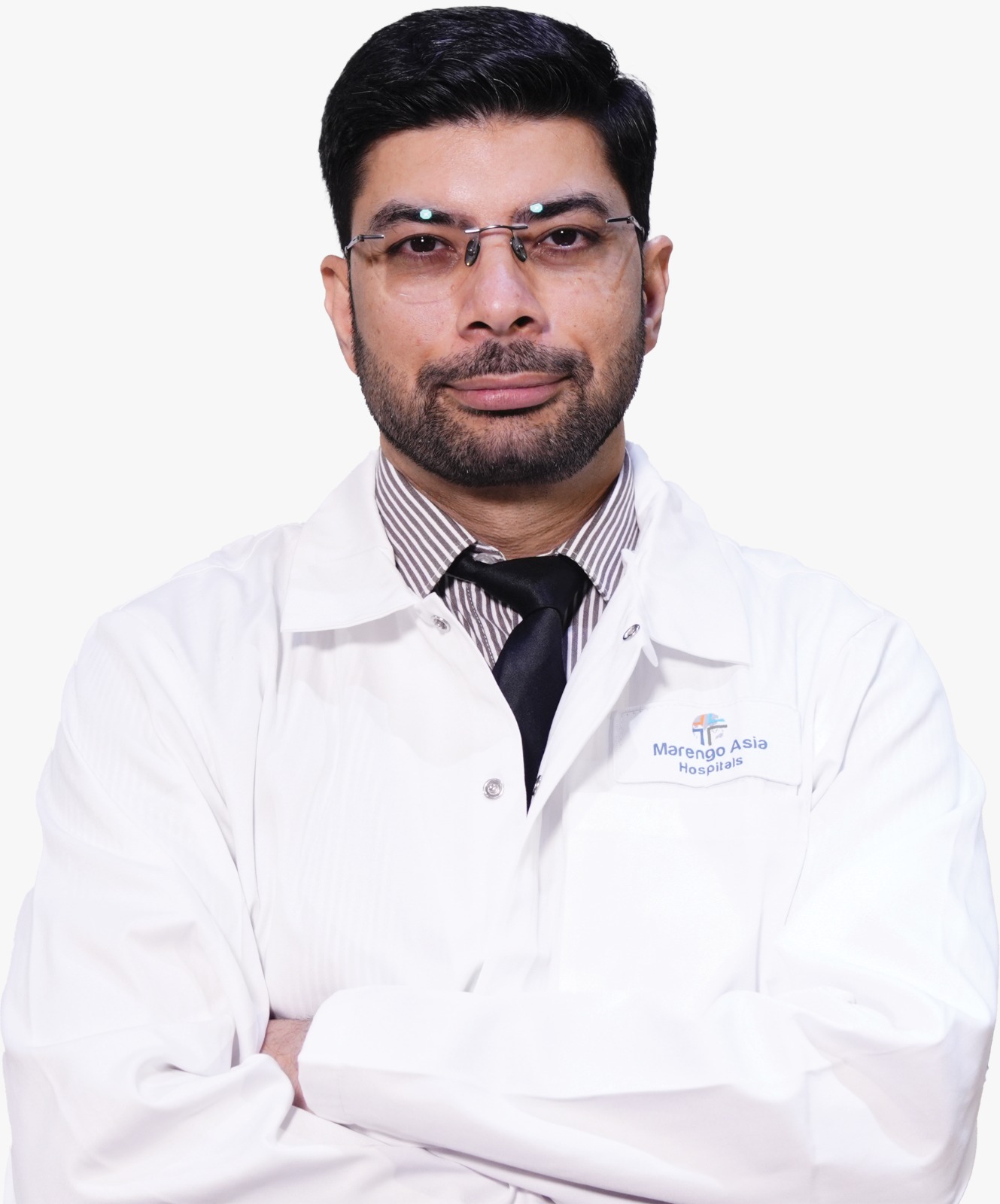
The professional experience of Dr. Robin Khosa includes senior and consultant-level roles in radiation oncology, along with residency training in radiotherapy. His areas of expertise include precision radiotherapy, Intensity-Modulated Radiation Therapy (IMRT), Volumetric Modulated Arc Therapy (VMAT), Image-Guided Radiation Therapy (IGRT), Stereotactic Radiosurgery (SRS), and Stereotactic Body Radiation Therapy (SBRT). He also has experience in brachytherapy, Deep Inspiration Breath Hold (DIBH) radiotherapy, Total Body Irradiation (TBI), and gated breast radiotherapy.
Dr. Khosa has received recognition for his research presentations at national oncology conferences, including the Dr. G. C. Pant Young Doctors Award and the AROI Fellowship Award. His academic interests include advanced radiotherapy techniques, image-guided treatment delivery, and precision radiation therapy.
Patients looking for Dr. Robin Khosa can consult him for radiation oncology evaluation and discussions about appropriate radiotherapy options.
Areas of Expertise
Dr. Robin Khosa's areas of expertise include:
- Precision radiotherapy
- Intensity-Modulated Radiation Therapy (IMRT)
- Volumetric Modulated Arc Therapy (VMAT)
- Image-Guided Radiation Therapy (IGRT)
- Stereotactic Radiosurgery (SRS)
- Stereotactic Body Radiation Therapy (SBRT)
- Deep Inspiration Breath Hold (DIBH) radiotherapy
- Total Body Irradiation (TBI)
- Radiation treatment of solid malignancies
- Brachytherapy
- Gated breast radiotherapy
- Image-guided precision oncology
Radiation Oncology and Cancer Treatment
Radiation oncology is a specialised field of cancer treatment that uses controlled doses of radiation to destroy cancer cells or prevent them from growing. It may be recommended as the primary treatment or alongside surgery and systemic cancer treatments, depending on the type, location and stage of cancer.
Radiotherapy can help treat several solid malignancies. It may also be used to control tumour growth, reduce the risk of cancer recurrence or relieve symptoms in selected patients.
Dr. Robin Khosa specialises in modern radiation treatment techniques, including precision and image-guided radiotherapy. The treatment approach is planned according to the patient's diagnosis, tumour characteristics, and overall health.
Advanced Radiotherapy Techniques
Modern radiotherapy techniques are designed to deliver radiation accurately to the treatment area while limiting exposure to nearby healthy tissues. Dr. Robin Khosa has expertise in several advanced treatment approaches.
Intensity-Modulated Radiation Therapy (IMRT)
IMRT is an advanced radiotherapy technique that adjusts the intensity of radiation beams to match the shape of the tumour. It helps deliver different radiation doses to different parts of the treatment area while limiting exposure to surrounding healthy tissues.
Volumetric Modulated Arc Therapy (VMAT)
VMAT delivers radiation while the treatment machine rotates around the patient. The radiation dose and beam shape are adjusted during this movement to target the tumour accurately.
Image-Guided Radiation Therapy (IGRT)
IGRT uses imaging during radiotherapy sessions to help verify the position of the tumour and treatment area. This allows the radiation team to check alignment and make necessary adjustments before or during treatment.
Stereotactic Radiosurgery (SRS)
SRS is a highly precise radiation treatment that delivers a concentrated dose of radiation to a defined target. Despite its name, it does not involve a surgical incision. It is used for selected tumours and other conditions, depending on their location and clinical characteristics.
Stereotactic Body Radiation Therapy (SBRT)
SBRT delivers highly focused radiation to tumours in the body using carefully planned treatment sessions. It may be considered for selected cancers where precise targeting is important.
Deep Inspiration Breath Hold (DIBH) Radiotherapy
DIBH is a specialised radiotherapy technique commonly used for selected patients receiving treatment for left-sided breast cancer. Patients take and hold a deep breath during treatment, which can increase the distance between the heart and the treatment area and help reduce radiation exposure to the heart.
Total Body Irradiation (TBI)
TBI involves delivering radiation to the entire body under a carefully planned treatment protocol. It may be used as part of the preparation for certain bone marrow or stem cell transplantation procedures.
Brachytherapy
Brachytherapy is a form of internal radiation treatment in which a radioactive source is placed inside or close to the tumour. This allows radiation to be delivered directly to the treatment area while limiting exposure to surrounding tissues.
Gated Breast Radiotherapy
Gated breast radiotherapy uses controlled breathing or motion monitoring to coordinate radiation delivery with the patient's breathing cycle. It may help improve treatment accuracy in selected breast cancer cases.
Radiation Treatment for Solid Malignancies
Solid malignancies are cancers that develop in organs or body tissues rather than in blood-forming tissues. Radiation therapy may be used to treat several types of solid tumours, depending on the diagnosis and treatment plan.
Dr. Robin Khosa has expertise in radiation treatment for solid malignancies. His knowledge of advanced radiotherapy techniques supports treatment planning for different cancer types, with an emphasis on precision and appropriate radiation delivery.
Work Experience
Dr. Robin Khosa has held several clinical and academic positions in radiation oncology. His professional experience includes:
- Director & Head – Radiation Oncology
- Senior Consultant, Radiation Oncology: Apollo Hospital, New Delhi (May 2016 – April 2026)
- Attending Consultant, Radiation Oncology: Apollo Hospital, New Delhi (April 2015 – April 2016)
- Consultant, Radiation Oncology: Action Cancer Hospital, New Delhi (April 2013 – March 2015)
- Junior Consultant, Radiation Oncology: Action Cancer Hospital, New Delhi (March 2011 – March 2013)
- Senior Resident, Department of Radiation Oncology: Batra Hospital & Medical Research Centre, New Delhi (May 2008 – February 2011)
- Residency Training in Radiotherapy: Government Cancer Hospital, Mahatma Gandhi Memorial College, Indore (May 2005 – May 2008)
- Junior Resident, Department of Radiotherapy: Government Medical College, Chandigarh (January 2005 – April 2005)
This experience reflects his professional involvement in radiation oncology across clinical practice and specialised radiotherapy training.
Qualifications
Dr. Robin Khosa's medical qualifications include:
- MBBS
- MD – Radiation Oncology
His postgraduate specialisation in radiation oncology provides the foundation for his work in cancer treatment and advanced radiotherapy techniques.
Awards and Accolades
Dr. Robin Khosa has received recognition for his contributions to radiation oncology research and academic presentations.
His awards include:
- Dr. G. C. Pant Young Doctors Award (2009): Received for the Best Oral Paper Presentation at AROICON 2009. The research paper was titled Daily Online Localization Using Implanted Fiducial Markers and Its Impact on Planning Target Volume for Prostate Carcinoma.
- AROI Fellowship Award (2010): Awarded by the Association of Radiation Oncologists of India at AROICON 2010.
- Best Paper – AROICON & ICC 2017: Recognised for the research paper titled Stereotactic Body Radiotherapy with Temporary Organ Displacement.
These recognitions highlight his academic contributions and interest in advancing precision radiotherapy.
Professional Memberships
Dr. Robin Khosa is associated with the following professional organisations:
- Indian Medical Association (IMA)
- Association of Radiation Oncologists of India (AROI)
- Indian College of Radiation Oncologists (ICRO)
These memberships reflect his professional association with medical and radiation oncology organisations.
Research and Academic Contributions
Dr. Robin Khosa has been actively involved in clinical research and academic presentations in radiation oncology. His research interests include advanced radiotherapy techniques, image-guided treatment delivery, stereotactic body radiotherapy, and treatment optimisation for cancer patients.
He has presented research papers and scientific abstracts at national and international oncology conferences, including AROICON and ICC. His research contributions include work on implanted fiducial markers for prostate cancer radiotherapy and stereotactic body radiotherapy with temporary organ displacement.
Medical Registration
- Delhi Medical Council (DMC) Registration Number: 38048
What Does a Radiation Oncologist Do?
A radiation oncologist is a doctor who specialises in treating cancer using radiation therapy. They evaluate the patient's diagnosis, determine whether radiotherapy is appropriate, and plan the radiation dose, treatment area, and schedule.
Radiation therapy may be used independently or alongside other cancer treatments, such as surgery and chemotherapy. The treatment plan depends on the type of cancer, its stage, location, and the patient's overall health.
When Should You Consult a Radiation Oncologist?
You may need to consult a radiation oncologist if you have received a cancer diagnosis and your treatment team has recommended radiation therapy. A specialist consultation can help you understand the purpose of radiotherapy, available techniques, and the expected treatment schedule.
Consider seeking a consultation if:
- You have been diagnosed with a solid tumour and need to discuss radiotherapy.
- Your oncologist has recommended radiation before or after surgery.
- You require radiation as part of a combined cancer treatment plan.
- You need a second opinion about an existing radiotherapy recommendation.
- You want to understand advanced techniques such as IMRT, VMAT, IGRT or SBRT.
A radiation oncologist can assess your reports and explain whether a particular radiotherapy technique is suitable for your condition.
Consult Dr. Robin Khosa
Dr. Robin Khosa specialises in radiation oncology and advanced radiotherapy techniques. His clinical experience, research contributions, and training in precision radiation treatment form part of his professional background in cancer care.
Patients searching for a Medical Oncologist Dr. Robin Khosa in Faridabad should note that his listed speciality is Radiation Oncology. For radiation treatment consultations, patients can enquire about an appointment. The OPD is from Monday to Saturday, 10:00 AM to 5:00 PM. Book an appointment to discuss your radiation oncology consultation and treatment requirements.