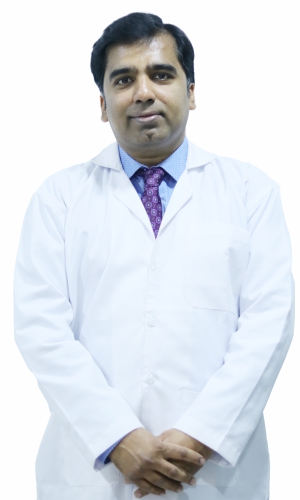
Dr. Nishant H. Sanghavi is a Cancer Surgeon in Ahmedabad with more than 14 years of experience in complex cancer surgery. He completed his MCh in Surgical Oncology at the Gujarat Cancer and Research Institute (GCRI), Ahmedabad, and later trained in advanced laparoscopic techniques for cancer surgery in Pune. At Marengo CIMS Hospital, his work covers cancers of the digestive system, urinary tract, head and neck, women's reproductive organs, breast, chest and soft tissues, with an emphasis on minimally invasive approaches.
If you are looking for Cancer Surgeon Dr. Nishant H. Sanghavi in Ahmedabad, you will find a surgeon who has led cancer centres as well as operated, which shapes how he plans treatment around the whole patient and the wider cancer team.
Qualifications and Training
- MBBS (2006): Smt. NHL Municipal Medical College, Ahmedabad
- MS, General Surgery (2010): Smt. NHL Municipal Medical College, Shardaben Hospital, Ahmedabad
- MCh, Surgical Oncology (2014): Gujarat Cancer and Research Institute (GCRI), Civil Hospital, Ahmedabad
- Advanced laparoscopic techniques in oncosurgery: Trained under Dr. Shailesh Putambekar at Galaxy Care Institute, Pune
Work Experience
- Consultant - Surgical Oncology: Marengo Asia Hospital, Ahmedabad
- Director and Consultant Surgical Oncologist: Zanish Cancer Hospital, Ahmedabad (March 2018 to present)
- Director: Unveilm Cancer Associates, Ahmedabad (2025 to present)
Areas of Expertise
Gastrointestinal and Hepatopancreatobiliary Oncology
Surgery for cancers of the stomach, oesophagus, colon, rectum and the hepatopancreaticobiliary region, which includes the liver, pancreas and bile ducts.
Uro-Oncology
Surgery for urological cancers, including renal cell carcinoma, bladder cancer, ureteric cancer and cancer of the penis.
Head and Neck Oncology
Surgery for cancers of the mouth, larynx, pharynx and post-cricoid region, and for tumours of the thyroid and salivary glands. His work includes laser surgery and microlaryngeal surgery.
Reconstructive Surgery
After removing a cancer, tissue from another part of the body can be used to rebuild the area. His profile lists these flap techniques:
- Radial forearm free flap
- Nasolabial flap
- Pectoralis major myocutaneous flap
- Deltopectoral flap
- Latissimus dorsi flap
- Forehead flap
Gynaecological Oncology
Surgery for cancers of the cervix, uterus, vagina, ovary and vulva.
Hyperthermic Intraperitoneal Chemotherapy (HIPEC)
HIPEC delivers heated chemotherapy inside the abdomen after surgery to remove tumours, for selected cancers that have spread within the abdominal cavity.
Breast Cancer Surgery
Management of breast cancer, including breast-conserving surgery and sentinel axillary lymph node biopsy.
Soft Tissue Sarcoma
Surgery for sarcomas in the head and neck, arms, legs, digestive tract, uterus, genitourinary tract and other sites.
Thoracic Oncology
Surgery for cancers of the lung, mediastinum and pleura.
Minimally Invasive Complex Cancer Surgery
Thoracoscopic and laparoscopic approaches for complex cancers inside the chest and abdomen, which can mean smaller incisions and a quicker recovery for suitable patients.
Diagnostic Procedures and Chemoport Insertion
- Endoscopies of various kinds
- Lump and lymph node biopsies
- Chemoport insertion for long-term chemotherapy infusion
What Does a Surgical Oncologist Do?
A surgical oncologist is a surgeon trained specifically to operate on cancer. They decide which tissue to remove, how to remove it safely, and how to restore function afterwards, and they work with medical oncologists, radiation oncologists, pathologists, and radiologists so that treatment is planned together. Surgery may be the main treatment or one part of a combined plan with chemotherapy or radiotherapy.
Minimally Invasive Cancer Surgery: What Patients Should Know
Laparoscopic and thoracoscopic surgery are done through small cuts using a camera and fine instruments, instead of one large incision. For suitable patients, this can mean less pain, smaller scars, and a faster return to normal life. Not every cancer or patient is suited to it, and the surgeon's priority is to remove the cancer completely. Your surgeon will advise which approach is safest for you.
Gastrointestinal Cancers
Cancers of the stomach, food pipe, colon and rectum can cause persistent indigestion, difficulty swallowing, blood in the stool, a change in bowel habits or unexplained weight loss. Surgery is often the main treatment, sometimes combined with chemotherapy or radiotherapy before or after the operation. Cancers of the liver, pancreas and bile ducts need specialised planning, which is why they are treated by hepatopancreaticobiliary surgeons.
Urological Cancers
Kidney, bladder, ureter and penile cancers may first show up as blood in the urine, pain in the side, a lump or a sore that does not heal. Treatment depends on the stage, and may involve removing the affected organ or part of it. Early assessment makes a real difference to the outcome.
Head and Neck Cancers and Reconstruction
Cancers of the mouth, throat, voice box and thyroid are often linked to tobacco and alcohol. Surgery removes the cancer and, where needed, rebuilds the area with tissue flaps so that speech, swallowing and appearance are preserved as far as possible. Your surgeon will explain what the reconstruction involves and what recovery looks like.
Gynaecological Cancers
Cancers of the cervix, uterus, ovary, vagina and vulva can cause abnormal bleeding, pelvic pain, unusual discharge or a feeling of fullness in the abdomen. Regular screening, such as cervical screening, can catch some of these early. Treatment may combine surgery with other therapies, planned by a team.
Breast Cancer and Sentinel Node Biopsy
Breast-conserving surgery removes the cancer and a margin of normal tissue while keeping the breast. A sentinel lymph node biopsy checks the first lymph node in the armpit, which can show whether the cancer has spread there and may avoid removing many nodes. Whether these techniques suit you depends on the size and type of the cancer.
Soft Tissue Sarcoma
Sarcomas are rare cancers that start in muscle, fat, nerves and other soft tissues. They can occur almost anywhere, and a lump that is growing, painful, or deep should always be examined. Treatment is planned by a specialised team, since the surgeon has to remove the tumour completely while preserving function.
HIPEC: Heated Chemotherapy Inside the Abdomen
HIPEC is used for selected patients with cancers that have spread inside the abdominal cavity, such as some ovarian, colorectal and appendix cancers. After the surgeon removes visible tumours, the abdomen is bathed in heated chemotherapy to treat microscopic disease. It is a major procedure, suitable only for carefully selected patients, and the team will explain whether it applies to your case.
Chemoport: Easier Chemotherapy Access
A chemoport is a small device placed under the skin, connected to a large vein, so that chemotherapy can be given repeatedly without needing a new needle in a small vein each time. It is placed in a short procedure, and your team will teach you how to care for it.
Getting a Second Opinion Before Cancer Surgery
A cancer diagnosis often comes with pressure to decide quickly. Seeking a second opinion is a reasonable and common step, and a good doctor will support it. It can confirm the diagnosis, the stage, and the proposed plan, or suggest another option. Bring all your reports so the second surgeon can review them properly.
Warning Signs That Need a Doctor's Attention
See a doctor if you notice:
- A lump or swelling that persists or keeps growing
- A sore, ulcer, or patch that does not heal within a few weeks
- Unexplained weight loss or ongoing tiredness
- Unusual bleeding, such as in the stool, urine, or between periods
- Difficulty swallowing, persistent hoarseness or a cough that does not go away
- A change in the breast, such as a new lump, nipple change, or skin change
- Pain that has no clear cause and does not settle
Most of these symptoms are caused by conditions other than cancer, but only an examination can tell the difference.
Preparing for Your Consultation
Bring your biopsy and pathology reports, scans, endoscopy reports, previous treatment records, and a list of your current medicines. Note your symptoms and questions beforehand, and consider bringing a family member who can listen and take notes. A clear picture of your history helps the surgeon plan treatment more accurately.
Consultation with Dr. Nishant H. Sanghavi
If you have been diagnosed with cancer, or have a lump or finding that needs a surgeon's opinion, you can consult Dr. Nishant H. Sanghavi at Marengo Asia Hospital in Ahmedabad. His OPD runs Monday to Saturday, 10:00 AM to 5:00 PM. Bring your reports and take your time to ask about the diagnosis and the options.