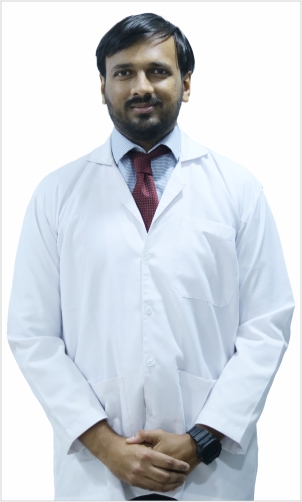
Cancer treatment often requires a coordinated approach that considers the type of cancer, its stage, its location, and the patient's overall health. Surgical oncology plays an important role in cancer care, particularly when an operation is recommended to remove a tumour or affected tissue.
His professional experience includes working as an Assistant Professor at Gujarat Cancer and Research Institute, Ahmedabad, and Bhavnagar Cancer Care and Research Institute, Bhavnagar, from March 2024 to February 2025. He also worked as a Senior Resident at Gujarat Cancer and Research Institute from January to February 2024.
As a leading Cancer Surgeon Nikunj Patel in Ahmedabad, his background includes performing cancer surgeries involving different organs, contributing to patient care and participating in the teaching of junior doctors. His academic and clinical experience provides a foundation for his work in surgical oncology.
Qualifications
- MCh – Surgical Oncology: Gujarat Cancer and Research Institute, Ahmedabad (January 2021 – December 2023)
- MS – General Surgery: Smt. N. H. L. Medical College, V. S. Hospital, Ahmedabad (May 2017 – September 2020)
- MBBS: M. P. Shah Medical College, Jamnagar (August 2011 – March 2017)
Areas of Expertise
Based on his surgical oncology qualification and professional background, his areas of practice may include:
- Surgical management of solid tumours
- Evaluation of patients requiring cancer surgery
- Surgical treatment planning for selected cancers
- Cancer-related procedures involving different organs
- Postoperative assessment and follow-up
- Coordination with multidisciplinary cancer care teams
Understanding Surgical Oncology
Surgical oncology is a specialised branch of medicine concerned with the surgical management of cancer. Depending on the diagnosis, surgery may be used to remove a tumour, obtain tissue for diagnosis, determine the extent of disease or help relieve symptoms.
The role of surgery varies according to the cancer type, its location and stage, and whether the disease has spread to other parts of the body. Some patients may benefit from surgery as the main treatment, while others may require a combination of surgery, chemotherapy, radiotherapy, targeted therapy or immunotherapy.
A surgical oncologist evaluates whether an operation is appropriate and considers the potential benefits, risks, and expected recovery. Treatment decisions are individualised, and patients may be referred to other specialists when additional therapies are required.
When Should You Consult a Cancer Surgeon?
A consultation with a surgical oncologist may be recommended when a patient has been diagnosed with cancer and surgery is being considered as part of treatment. Patients may also be referred for a specialist opinion after a biopsy, imaging investigation or assessment by another doctor.
The need for surgery depends on several factors, including the tumour's size and location, the stage of the disease, the patient's general health and the availability of other treatment options. Not every cancer requires surgery, and the most appropriate approach should be determined after reviewing the diagnosis and relevant investigations.
Patients should bring their biopsy reports, imaging scans, pathology results, previous prescriptions, and details of any treatment already received. These records can help the specialist understand the diagnosis and discuss possible next steps.
Cancer Conditions and Surgical Evaluation
Cancer can affect different organs and tissues, and treatment varies according to the specific diagnosis. Surgical oncology may form part of the treatment plan for selected cancers affecting the breast, gastrointestinal tract, head and neck, skin and soft tissues, and other organs.
Before recommending surgery, the treating team may review the pathology report, imaging findings, and the extent of the disease. Additional investigations may be required to establish the stage of cancer and determine whether an operation is suitable.
The objective is to develop an appropriate treatment plan based on the patient's clinical condition and individual needs. The specific cancer types treated by Dr. Nikunj Patel should be verified with the hospital before publication.
Procedures and Services in Surgical Oncology
Surgical oncology services may include assessment of suspected or confirmed cancers, evaluation for tumour removal, surgical treatment planning and postoperative follow-up. Depending on the cancer type and the surgeon's practice, operations may involve removing a tumour and a surrounding margin of tissue or addressing nearby lymph nodes when clinically indicated.
Patients may also require coordination with medical oncologists, radiation oncologists, radiologists, pathologists and other specialists. This multidisciplinary approach helps ensure that decisions about surgery and additional treatment are based on a comprehensive assessment.
Academic Experience and Contributions to Patient Care
In addition to his surgical training, Dr. Nikunj Patel has experience in academic teaching and professional development. During his professional career, he has participated in teaching junior doctors and supporting their clinical development. His background also includes performing cancer surgeries involving different organs and contributing to patient care.
Continued professional development through workshops and seminars has been part of his stated professional activities. These experiences bring together surgical training, clinical practice, and academic involvement.
Your Consultation with Dr. Nikunj Patel
During a surgical oncology consultation, patients can discuss their diagnosis, available treatment options, and whether surgery may be appropriate. The consultation may include a review of medical history, previous investigations and treatments, along with an assessment of the patient's general health.
Patients should bring relevant medical records, including biopsy reports, scans, pathology results and previous treatment summaries. They may also wish to ask about the purpose of the proposed operation, its potential risks, recovery expectations, and whether additional treatment may be needed.
The recommended course of care depends on the cancer diagnosis, the results of clinical assessment and the patient's individual circumstances.
Book an Appointment with Dr. Nikunj Patel
To book a consultation with Dr. Nikunj Patel at Marengo Asia Hospital in Ahmedabad, visit during OPD hours from Monday to Saturday, 10:00 am to 5:00 pm. Please confirm appointment availability with the hospital before visiting.