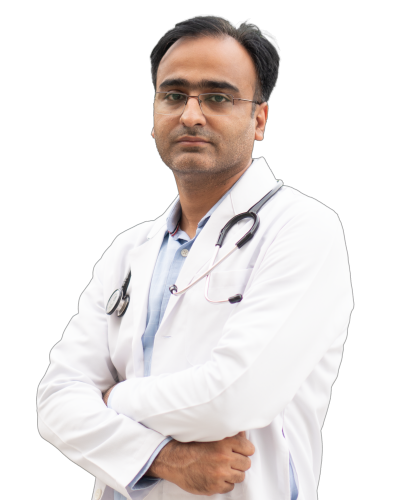
Consultant Dr. Neeraj Teotia has more than 5 years of experience in paediatric haematology and bone marrow transplant, and he sees children at both Marengo Asia Hospitals, Gurugram, and Marengo Asia Hospitals, Faridabad. A diagnosis of cancer or a serious blood disease in a child is among the hardest news a family can receive, and the first days are usually a blur of tests, new words and difficult choices. He focuses on slowing that conversation down, explaining what the reports mean, what treatment involves, and what to expect, in plain words and with both parents involved.
Qualifications
- MBBS, JN Medical College, Belgaum
- MD (Paediatrics), LLRM Medical College, Meerut
- FNB (Paediatric Haematology-Oncology), Rajiv Gandhi Cancer Institute and Research Centre (RGCIRC), Delhi
- Fellowship in Paediatric Bone Marrow Transplant and Cellular Therapy, Royal Bristol Hospital for Children and Bristol Haematology and Oncology Centre, University Hospitals Bristol and Weston (UHBW), UK
Areas of Expertise
- Paediatric Bone Marrow Transplant
- Leukaemia and Lymphoma in Children
- Paediatric Solid Tumours, including Neuroblastoma, Rhabdomyosarcoma (RMS) and Osteosarcoma
- Aplastic Anaemia and Bone Marrow Failure Syndromes
- Paediatric Haematology
- Cellular Therapy
Career Highlights
- Consultant, Paediatric Haemato-Oncology and Bone Marrow Transplant, Marengo Asia Hospitals, Gurugram and Faridabad
- Royal Bristol Hospital for Children, UHBW, UK
- Indraprastha Apollo Hospital, Delhi
- Rajiv Gandhi Cancer Institute and Research Centre, Delhi
- University College of Medical Sciences (UCMS), Delhi
Research and Academic Work
- More than 10 publications in national and international journals
- Panelist and moderator at many conferences
Who Looks After a Child With a Blood Disease or Cancer
Children are not small adults, and the blood diseases and cancers that affect them are different from those in adults. They start in different places, behave differently and are treated with different plans. A paediatric haemato-oncologist is a children’s doctor with extra training in blood disorders and childhood cancers, and a bone marrow transplant specialist adds the care of children who need a transplant. If you are looking for a Paediatric Haemato-Oncologist in Gurugram or Faridabad, it helps to look for a team that treats only children, has a dedicated children’s ward, and includes nurses, counsellors, and play therapists as well as doctors.
What the First Consultation Looks Like
A visit with Dr. Neeraj Teotia begins with a conversation about your child’s symptoms, how long they have lasted, birth and growth history, earlier illnesses, vaccinations and any family history of blood disease or cancer. He will examine your child gently, looking for pallor, bruising, swollen glands and an enlarged liver or spleen. Blood tests, scans, a bone marrow test or other investigations may be advised. Please bring all earlier reports, slides and scan films in date order, and both parents if possible, since there is a great deal to take in.
Signs in a Child That Need a Prompt Check
Fever lasting more than two weeks, persistent paleness and tiredness, easy bruising or bleeding, small red spots on the skin, repeated infections, swollen glands, bone pain or limping that does not settle, a lump anywhere, persistent headaches with vomiting, and unexplained weight loss are all worth a proper check. Most children with these signs do not have cancer, and common causes such as infections and anaemia are far more likely. Still, do not wait or treat them with supplements or home remedies for weeks.
Leukaemia and Lymphoma in Children
Leukaemia is a cancer of the blood and bone marrow, and it is the commonest cancer in children. Lymphoma affects the lymph glands and related tissues. Signs include pallor, tiredness, fever, bruising, bone pain, and swollen glands. Diagnosis needs blood tests and a bone marrow examination, and sometimes a scan or biopsy to identify the exact type. Treatment is usually chemotherapy given in carefully planned phases over a long period, and some children need a bone marrow transplant. Your doctor will explain the type, the plan and what to expect at each stage.
Solid Tumours in Children
Solid tumours form a lump in a part of the body and include neuroblastoma, which starts in nerve tissue, often in the abdomen, rhabdomyosarcoma (RMS), a cancer of soft tissue, and osteosarcoma, a cancer of the bone. Signs depend on where the tumour is and may include a swelling, pain, limping, a lump, a change in an eye, or a persistent unexplained fever. Treatment usually combines chemotherapy, surgery and sometimes radiation, planned by a team of specialists. Ask what the goal of treatment is, how long it will take and what the side effects may be.
When the Bone Marrow Stops Making Blood
The bone marrow is the soft tissue inside bones where blood cells are made. In aplastic anaemia and other bone marrow failure syndromes, it does not make enough red cells, white cells or platelets, leading to tiredness, infections and bleeding. Some of these conditions are acquired, and some are inherited, so tests are needed to find out which type a child has. Treatment may involve medicines that suppress the immune system, supportive care with transfusions, or a bone marrow transplant. Avoid unproven remedies, and bring all earlier blood reports to the first visit.
Bone Marrow Transplant, What Families Should Know
A bone marrow transplant, also called a stem cell transplant, replaces diseased bone marrow with healthy stem cells. In an autologous transplant, the child’s own stem cells are collected, stored, and given back after high-dose treatment. In an allogeneic transplant, the cells come from a donor, who may be a matched sibling, a matched unrelated donor, or a half-matched family member, which is called a haploidentical transplant. A transplant is a major treatment with real risks, including infection and graft-versus-host disease, and it is advised only when it offers the best chance of controlling a disease. Ask your team about the type of transplant, the donor, the risks, and the timeline.
Finding a Donor
Donors are chosen by matching tissue types, known as HLA types, between the child and the donor. A brother or sister has about a one in four chance of being a full match. If there is no matching sibling, a search begins for a matched unrelated donor through registries, and a parent can often be a half-matched donor. Donating stem cells is voluntary, and donors are checked carefully for their own safety. Families should ask about the search process, how long it may take, and what the alternatives are.
The Transplant Journey Step by Step
A transplant begins with a full assessment of the child, including heart, lungs, kidneys, and infections, followed by conditioning treatment, which uses chemotherapy and sometimes radiation to prepare the body. The stem cells are then given through a drip, much like a blood transfusion. The next weeks are spent in a protected room while the new cells begin to make blood, and the child is closely watched for infection, bleeding, and other problems. Recovery continues for months after discharge, with regular visits, medicines and blood tests. Parents are an essential part of care, and the team will guide you through each stage.
Cellular Therapy in Plain Words
Cellular therapy uses living cells as treatment, for example by modifying a patient’s own immune cells so that they recognise and attack cancer cells. It is used in selected situations, usually when other treatments have not worked, or the disease has returned, and it needs a specialised team and careful monitoring for side effects. It is not suitable for every child or every condition. If you are told that it might be an option, ask who is eligible, what the benefits and risks are, and what follow-up is needed.
Keeping Infection Away During Treatment
Many treatments lower a child’s white blood cells, which fight infection, so even a mild infection can become serious. Wash hands often, keep the child away from sick people and crowds when counts are low, serve freshly cooked food, and keep the mouth clean. Check the temperature if the child seems unwell, and call the team immediately if there is a fever. Do not give paracetamol to hide a fever before calling. Keep vaccinations up to date as advised by the team, since some need to be timed or delayed during treatment.
School, Play and Growing During Treatment
Children need normal life as far as possible. Many continue schoolwork at home or in hospital, and the team can speak to the school about absences, infection control and catching up. Play is not a luxury, and play therapists use it to prepare children for procedures and to help them express fear. Encourage gentle activity, regular sleep and small, frequent meals. Be honest with your child in words they can understand, since children often sense more than adults think.
Support for Parents and Siblings
A child’s illness affects the whole family. Parents may feel exhausted, frightened, guilty or alone, and brothers and sisters can feel left out or worried. Talk openly with the team about how you are coping, ask for counselling, and connect with other parents if you can. Share the care with family and friends, and take breaks. Keep routines for siblings, tell them what is happening in age-appropriate words, and make time for each child.
Life After Treatment
Most families look forward to the end of treatment, and it can also feel frightening to step away from daily contact with the team. Regular follow-up checks for any return of the disease and for late effects of treatment on growth, hormones, heart, fertility and learning. Keep a summary of your child’s treatment, since it will be needed throughout life. Healthy habits, vaccinations, school support and an open conversation with your child about their health help them to grow up well.
Warning Signs During Treatment
Go to the nearest emergency department or contact the team straight away for a fever or chills, bleeding that does not stop, severe pain, repeated vomiting or diarrhoea, difficulty breathing, severe drowsiness or confusion, a new rash, a seizure, or redness and swelling around a central line. After a transplant, any change in a child’s condition should be reported at once. Keep the emergency number given by the team handy at all times.
Choosing Between Gurugram and Faridabad
Dr. Teotia sees patients at both Marengo Asia Hospitals in Gurugram and Marengo Asia Hospitals in Faridabad, so families in either city can reach him without a long journey. Follow-up visits, blood tests, and routine reviews can often be done at whichever location is closer, with the plan shared by the team. Ask the team which centre is best for the stage of treatment your child is at, and keep your child’s records handy at both.
Booking an Appointment
To book a consultation with Dr. Neeraj Teotia, visit Marengo Asia Hospitals in Gurugram, from Monday to Saturday, 9:00 am to 5:30 pm, or Marengo Asia Hospitals in Faridabad, on Tuesday, Thursday and Saturday, 2:00 pm to 5:00 pm. Please bring your child’s earlier blood reports, bone marrow and biopsy reports, scans, discharge summaries, vaccination card and prescriptions, along with a list of any medicines and supplements your child takes.