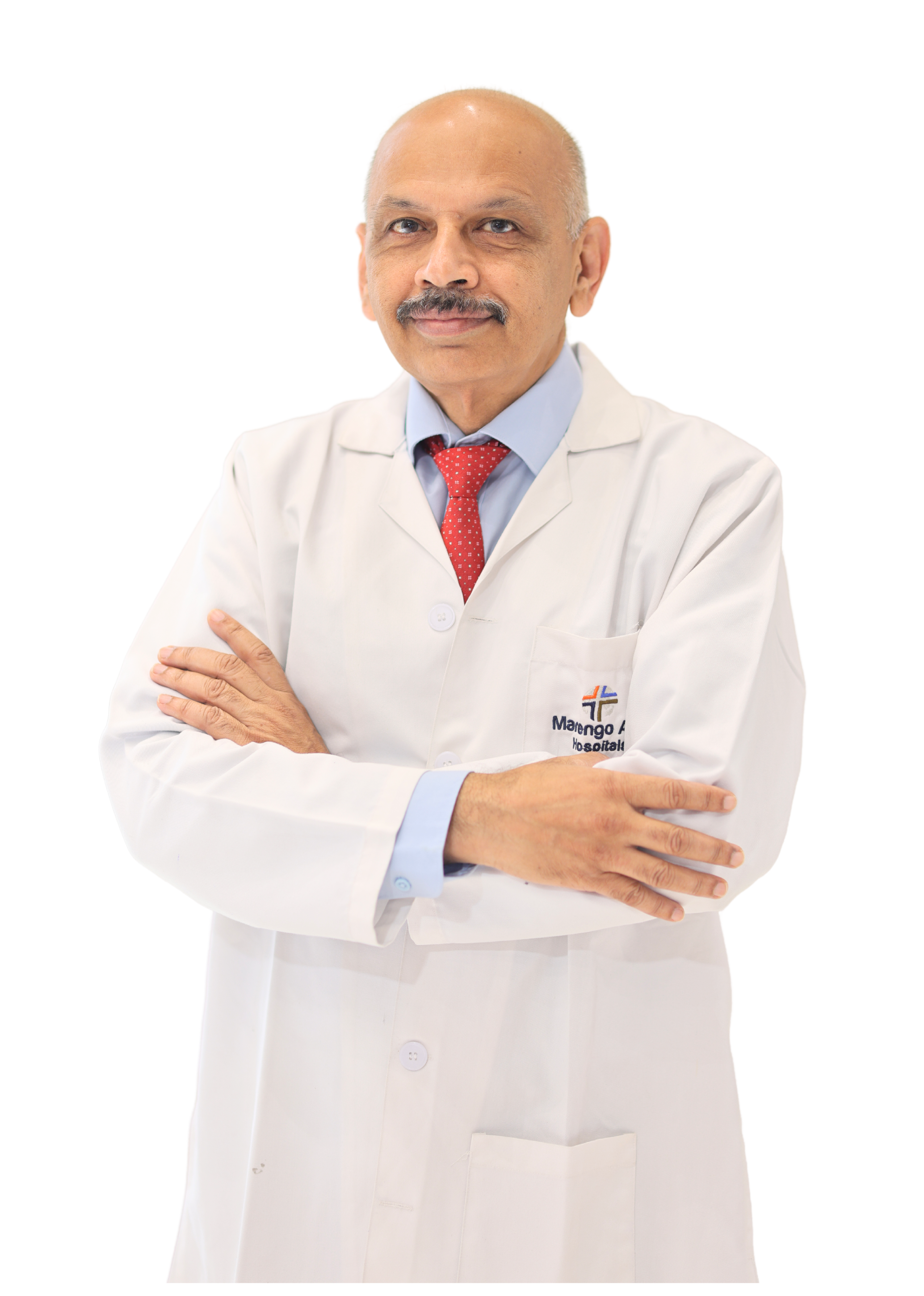
Dr. (Air Cmde) Krishan Kumar Yadav is a senior Neurosurgeon in Gurugram with more than 35 years of experience in brain and spine surgery. After training at Armed Forces Medical College (AFMC), Pune, where he completed his MBBS, MS in General Surgery, and MCh in Neurosurgery, he built his career in the Armed Forces Medical Services. At Marengo Asia Hospitals, he leads neurosurgery and neurospine surgery, with a particular interest in minimally invasive spine surgery and advanced instrumentation. If you are looking for Neurosurgeon Dr. Krishan Kumar Yadav in Gurugram for a brain tumour, a spine problem, or a head or spine injury, his experience covers the full range of conditions, from emergencies and trauma to complex tumours and spinal deformity.
Qualifications and Training
- MBBS (1990): AFMC, Pune University
- MS, General Surgery (1999): AFMC, Pune University
- MCh, Neurosurgery (2006): AFMC, Pune University
- Service courses: MOBC, MOSCC, SMOCC and Aviation Medicine
- Additional training: MET, BCBR, SHAW, ethics, telemedicine and communication skills
Areas of Expertise
Brain and Spine Surgery, Including Skull Base Tumours
He operates on tumours and other conditions of the brain and spine, including tumours at the skull base, the bony floor beneath the brain.
Spine Instrumentation
His work includes spinal fusion devices, cages and artificial discs, which are used to stabilise the spine or replace a damaged disc.
Minimally Invasive Spine Surgery (MISS) and Kyphoplasty
Minimally invasive techniques reach the spine through small openings. Kyphoplasty is a procedure for certain spinal fractures that restores some height to the collapsed bone and eases pain.
Spine Disc Disease, Degenerative Disorders and Deformities
He treats prolapsed intervertebral discs (PIVD), age-related wear of the spine and spinal deformities.
Stroke, Cerebrovascular and Functional Neurosurgery
His work covers diseases of the brain’s blood vessels and functional conditions treated with neurosurgical techniques.
Endoscopic, Pituitary and Paediatric Neurosurgery
- Endoscopic neurosurgery
- Pituitary gland surgery
- Neurosurgery in children
TB and Infections of the Brain and Spine
He treats tuberculosis and other infections affecting the brain and spine.
Emergency and Trauma Neurosurgery
He manages head and spine injuries, where fast decisions protect the brain and spinal cord.
Military Neurosurgery and Air Evacuation
His profile includes experience in military neurosurgery and air evacuation of patients with neurosurgical injuries.
Low Back Pain and Cervical Spondylosis
He treats long-standing back pain and age-related neck problems, including when surgery is needed.
Awards and Recognition
- Chief of Air Staff Commendation (2010)
- Fellowship, Association of Surgeons of India (2018)
- Representative, International Military Medical Conference, Basel (2018)
- UPSC Empanelled Advisor / Subject Expert (2021)
- Chief Trauma Coordinator, AFMC/CHSC & CHAFB (2014 to 2019)
Teaching and Academic Contributions
Dr. Krishan Kumar Yadav has been an invited speaker and chairperson at more than 60 national and international conferences. He has served as examiner, convener, PG guide, and paper setter for MCh and DNB Neurosurgery, training and assessing the next generation of neurosurgeons.
Professional Memberships
- Neurological Society of India (NSI)
- Neuro Spinal Surgeons Association (NSSA)
- Skull Base Society of India (SBSSI)
- Indian Society of Stereotactic & Functional Neurosurgery
- American Association of Neurological Surgeons
- AO Spine (Switzerland)
- Association of Surgeons of India (ASI)
- Indian Medical Association (IMA)
What Does a Neurosurgeon Do?
A neurosurgeon is a surgeon trained to diagnose and operate on conditions of the brain, spine and nervous system. That can include tumours, bleeding, head and spinal injuries, infections, and degenerative problems of the spine. Many patients do not need surgery, so a good neurosurgeon also advises when medicines, physiotherapy or watchful waiting is the better choice.
Brain and Skull Base Tumours
Brain tumours may be benign or cancerous, and symptoms depend on where they sit. They can cause headaches, seizures, weakness, vision changes or personality changes. Skull base tumours lie close to important nerves and blood vessels, so surgery needs careful planning based on detailed scans. Treatment may combine surgery with radiotherapy or other therapy, and your team will explain the options.
Minimally Invasive Spine Surgery: What Patients Should Know
In minimally invasive spine surgery, the surgeon works through small cuts using a camera and specialised instruments, instead of opening up a large area of the back. For suitable patients, benefits can include less pain after surgery, a shorter hospital stay and an earlier return to activity. It does not suit every spine problem, and your surgeon will advise whether it fits your condition after reviewing your scans.
Spinal Fusion, Cages and Artificial Discs
When a spinal segment is unstable or a disc is badly damaged, fusion joins the bones so they heal into one, often with cages and screws for support. An artificial disc replaces a worn disc in selected patients to preserve movement. The right option depends on your age, the level involved and the condition of the neighbouring discs.
Slipped Disc and Spinal Nerve Compression
A spinal disc can bulge or rupture and press on a nerve, causing pain, tingling or weakness in the arm or leg. Many patients improve with rest, medicines and physiotherapy. Surgery is considered when symptoms are severe, persistent, or getting worse, or when there is weakness or loss of bladder or bowel control. An MRI shows the disc and the affected nerve.
Kyphoplasty for Spinal Fractures
When a vertebra collapses, often because of osteoporosis, it can cause severe back pain. In kyphoplasty, a balloon is inserted into the fractured bone to restore some height, and bone cement is then placed to stabilise it. It is used for selected fractures, and your doctor will assess whether it suits you.
Neck Pain and Cervical Spondylosis
Cervical spondylosis is age-related wear of the neck spine. It can cause neck pain and stiffness, and sometimes numbness or weakness in the arms. When the spinal cord itself is under pressure, symptoms can include clumsiness in the hands and difficulty walking, and this needs prompt assessment.
Spinal Deformity
Deformities such as abnormal curves of the spine can be present from childhood or develop with age. They may cause pain, imbalance, or reduced function. Treatment ranges from monitoring and bracing to surgery, depending on the type and severity.
Pituitary and Endoscopic Surgery
The pituitary gland sits at the base of the brain and controls many hormones. Tumours here can affect hormones and vision. Many can be removed through the nose using an endoscope, avoiding a cut on the face or skull. Your surgeon will explain whether this approach suits your case.
Paediatric Neurosurgery
Children can have brain and spine conditions that differ from those in adults, such as hydrocephalus (fluid build-up in the brain), birth-related spine conditions and brain tumours. They need a team experienced in caring for young patients, and parents should feel free to ask about each step.
TB and Infections of the Brain and Spine
Tuberculosis can affect the spine, causing back pain, deformity and sometimes weakness in the legs. Infections of the brain, such as abscesses, need urgent treatment. Treatment usually combines long courses of medicines with surgery in some cases.
Stroke and Cerebrovascular Disease
Disorders of the brain’s blood vessels include stroke, aneurysms, and abnormal vessel tangles. A stroke is an emergency, and quick treatment saves brain tissue. Neurosurgeons and neurologists often work together on these conditions.
Emergency and Trauma Neurosurgery
After a serious head or spine injury, urgent assessment protects the brain and spinal cord from further damage. Do not move a person with a suspected spine injury unless there is immediate danger, and call for emergency help. Early scans and treatment make a significant difference.
Warning Signs of Brain and Spine Problems
Go to the emergency department straight away if you or someone near you has:
- A sudden, very severe headache
- Sudden weakness, numbness, slurred speech or loss of vision
- A seizure or loss of consciousness
- A head or spine injury with drowsiness, vomiting, or weakness
- Back pain with loss of bladder or bowel control, or numbness in the groin
- Rapidly worsening weakness in the arms or legs
Looking for a Neurosurgeon? Symptoms to Take Seriously
See a doctor soon if you notice:
- Headaches that keep getting worse, or that wake you at night
- Neck or back pain that spreads to an arm or leg
- Persistent numbness, tingling or weakness in the limbs
- Difficulty with balance, walking or fine hand movements
- Unexplained seizures or fainting
- Back pain that does not ease with rest and treatment over several weeks
Seek emergency care straight away for sudden weakness, a drooping face, slurred speech or a sudden severe headache.
Recovery After Brain and Spine Surgery
Recovery depends on the operation and your general health. Most patients are encouraged to start gentle movement early, with physiotherapy and guidance on how to move safely. Your surgeon will explain wound care, activity limits, pain control, and follow-up. Report fever, wound discharge, new weakness, or severe pain promptly.
Getting a Second Opinion Before Brain or Spine Surgery
Being told you need surgery on your brain or spine is frightening, and a second opinion is a reasonable and common step. It can confirm the diagnosis and the plan, or suggest another approach. Bring your MRI and CT scans and reports, ideally with the films or discs, so the second surgeon can review them properly.
Preparing for Your Consultation
If you have searched for “Neurosurgeon near me Gurugram”, a little preparation will help you get the most from your first visit. Bring your MRI and CT scans, previous reports, and a list of your current medicines. Note when your symptoms began, what makes them better or worse, and any numbness, weakness, or changes in walking. Write down your questions beforehand, and bring a family member for support.
Meet Dr. (Air Cmde) Krishan Kumar Yadav
If you have been advised surgery on your brain or spine, or you want a second opinion on a neurosurgical problem, you can consult Dr. (Air Cmde) Krishan Kumar Yadav at Marengo Asia Hospitals. For families looking for a neurosurgeon in Gurugram, an early conversation about your scans and options often makes a frightening decision clearer. His OPD runs Monday to Saturday, 9:00 AM to 5:00 PM.