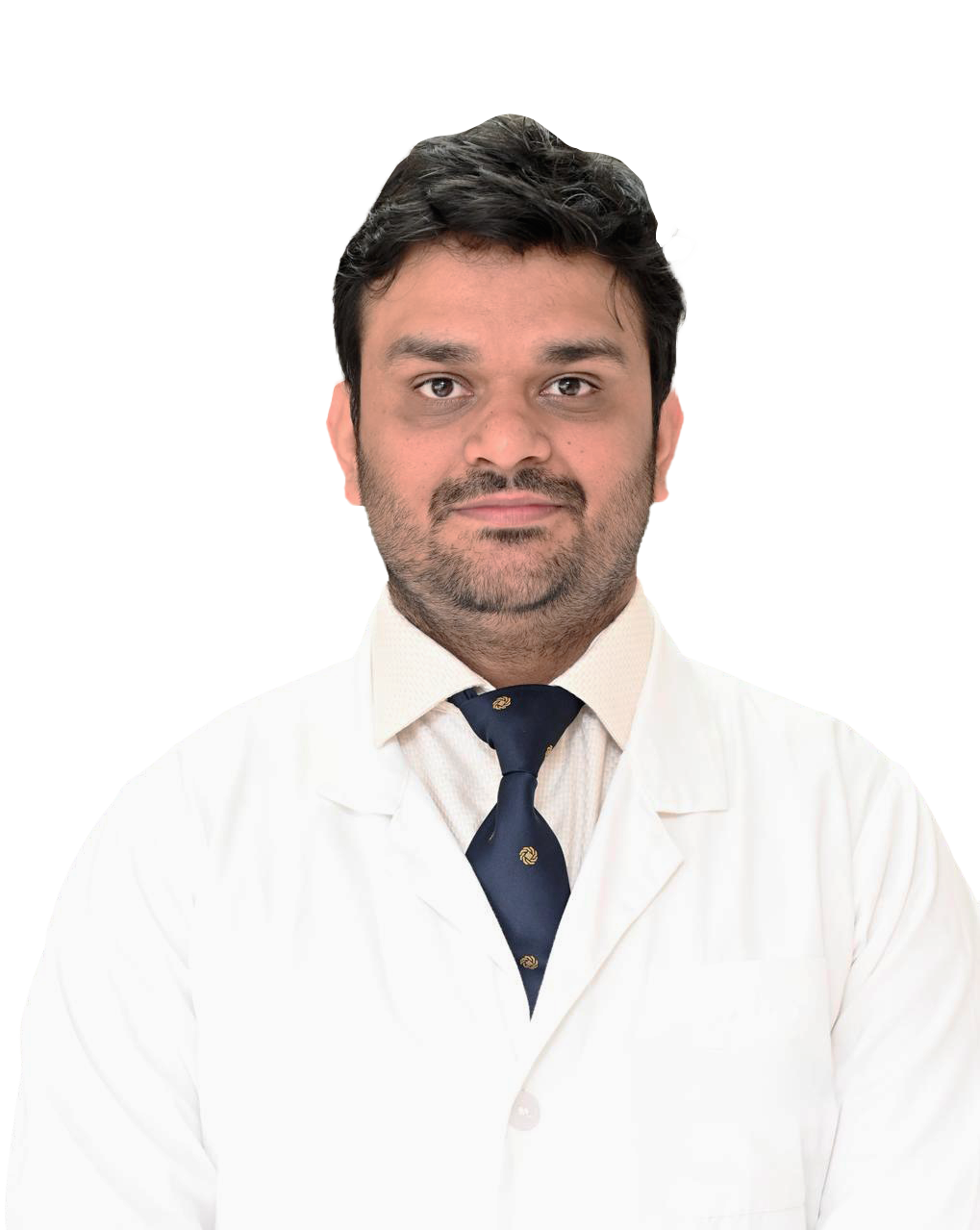
Dr. Ipanshu Malik is an Orthopaedic Surgeon in Gurugram who specialises in robotic joint replacement, arthroplasty, sports medicine and trauma surgery. At Marengo Asia Hospitals, he treats joint, bone, and sports problems, from worn knees and hips to fractures and sports injuries. His training combines an MS in Orthopaedics from PGIMS Rohtak, an AO Arthroplasty Fellowship and a FIFA Diploma in Football Medicine. If you are looking for Orthopaedic Surgeon Dr. Ipanshu Malik in Gurugram, he brings operative experience from several leading hospitals in and around the city, along with training in both modern joint replacement and the care of active, sporting patients.
Qualifications and Training
- MBBS (2013-2017): UCMS Delhi, with the Medicine Gold Medal
- MS Orthopaedics (2019-2022): PGIMS Rohtak
Fellowships and Certifications
- AO Arthroplasty Fellowship (2026)
- FIFA Diploma in Football Medicine (2025)
Areas of Expertise
Robotic Joint Replacement and Arthroplasty
Dr. Ipanshu Malik performs robotic joint replacement and arthroplasty for patients whose joints have been damaged by arthritis or injury.
Sports Medicine and Arthroscopy
His sports medicine work covers the diagnosis and treatment of injuries in athletes and active people, including arthroscopic (keyhole) surgery. His FIFA Diploma in Football Medicine reflects his focus on this area.
Complex Trauma Surgery
He treats complex fractures and serious bone and joint injuries, where careful planning and surgical skill help restore function.
Deformity Correction
He treats bone and limb deformities that affect alignment, walking and daily activity.
Operative and Orthopaedic Patient Care
His practice covers care before, during, and after orthopaedic surgery, from the first assessment to recovery.
Work Experience
- Fortis Hospital, Manesar, Gurugram: Consultant, Orthopaedics
- Artemis Hospital: Classified Specialist (January 2026 to June 2026)
- Shalby Sanar International Hospital: Attending Consultant (2024 to 2025)
- Delhi Government Hospital: Senior Resident (January 2023 to September 2023)
- PGIMS Rohtak: Senior Resident (2022 to 2023)
Key Achievements
- Awarded the Medicine Gold Medal during his MBBS at UCMS Delhi
- Completed the AO Arthroplasty Fellowship and the FIFA Diploma in Football Medicine
- Authored 8 peer-reviewed publications, with multiple presentations at national orthopaedic conferences
Professional Memberships and Certifications
- Indian Orthopaedic Association
- Indian Medical Association
- ASAMI India
- AO Arthroplasty Certified
- FIFA Football Medicine Certified
What Is Robotic Joint Replacement?
Robotic joint replacement uses a computer-guided system to help the surgeon plan and place a knee or hip implant with high precision. The surgeon still operates, while the technology adds detail and consistency. For suitable patients, the potential benefits include more accurate implant alignment, though results always depend on the individual case, and your surgeon will advise whether it suits you.
Arthroplasty: When Is a Joint Replaced?
Arthroplasty means replacing a damaged joint surface with an implant, most often in the knee or hip. It is usually considered when pain and stiffness continue despite medicines, exercise, and other treatment, and when walking, climbing stairs, or sleeping becomes difficult. Whether surgery is right for you depends on your joint, age, health and goals. Many people find that other options are available first.
Sports Medicine and Football Medicine
Sports injuries can affect athletes of every level, as well as people who are simply active. Common problems include ligament tears, meniscus injuries, muscle and tendon strains, and overuse injuries. Football and other contact sports carry a particular risk of knee, ankle, and groin injuries. Prompt assessment, proper rehabilitation and a planned return to play help protect the joint over the long term.
Arthroscopy: Keyhole Surgery for Joints
Arthroscopy uses a small camera and fine instruments inserted through tiny cuts to see and repair problems inside a joint. It is commonly used for ligament and meniscus injuries in the knee and for shoulder problems. Compared with open surgery, it typically means smaller scars and an earlier start to rehabilitation.
ACL and Ligament Injuries
The anterior cruciate ligament (ACL) stabilises the knee, and tearing it often happens during sports that involve sudden twisting or stopping. Many people with a torn ACL feel the knee give way or swell soon after the injury. Treatment may involve physiotherapy or reconstruction with a graft, depending on your age, activity level and the extent of the injury.
Complex Trauma and Fracture Care
Serious fractures, especially around joints, need careful planning and surgical skill. The aim is to restore the bone and joint surface and allow early movement, so the patient can return to normal life as fully as possible. Trauma care also involves rehabilitation, which is as important as the operation itself.
Deformity Correction: What It Means
Deformities can be present from birth or develop after an injury, infection, or joint disease. They can cause an uneven walk, pain, or difficulty with everyday tasks. Treatment depends on the cause and location, and may involve surgery to realign the bone. A careful assessment with imaging helps plan the best approach.
Symptoms That Need an Orthopaedic Surgeon’s Attention
See a doctor if you notice:
- Joint pain that wakes you at night or limits walking and daily activity
- Stiffness or swelling in a knee, hip or shoulder that does not settle
- A knee that gives way, locks, or feels unstable
- A twisting injury followed by swelling and pain
- A limb that looks bent or uneven, or an unusual walk
- Pain that stays after an injury beyond a few weeks
- A visible deformity or severe pain after a fall or accident
Seek emergency care straight away after a serious injury, with heavy bleeding, a bone visible through the skin or loss of feeling in a limb.
Preparing for Your Orthopaedic Consultation
Bring your X-rays, MRI scans and previous reports, along with a list of your current medicines and any earlier surgeries. Note when the pain began, what makes it better or worse, and how it affects your daily routine or sport. These details help your surgeon recommend the most suitable treatment.
Book a Consultation with Dr. Ipanshu Malik
If you have been advised joint replacement, are recovering from a sports injury, or want a second opinion on an orthopaedic problem, you can consult Dr. Ipanshu Malik at Marengo Asia Hospitals in Gurugram. His OPD runs Monday to Saturday, 10:00 AM to 4:00 PM.