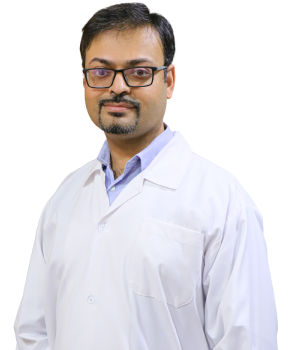
Dr. Harshit Bavishi is an Anesthesiologist in Ahmedabad who specialises in anaesthesia for complex surgery, particularly transplant and cardiac operations. At Marengo Asia Hospital, he looks after patients before, during, and after major procedures, with patient safety as the guiding principle. His years at Manipal Hospital and Narayana Hrudayalaya in Bengaluru, followed by transplant anaesthesia at Sparsh Hospital, have given him experience across heart, lung, and liver transplant care. If you are looking for Anesthesiologist Harshit Bavishi in Ahmedabad because a major operation is planned for you or a family member, he works alongside the surgical team to keep the patient stable and comfortable at every stage.
Qualifications and Training
- MBBS: Rajiv Gandhi University of Health Sciences, Karnataka
- MD: MS Ramaiah Medical College, RGUHS, Bengaluru
- Cardiac Anaesthesia Fellowship (FIACTA): Manipal Hospital, Bengaluru
- Additional credentials: MRCP (UK), FAPSR, European Diploma in Adult Respiratory Medicine
Work Experience
- Anaesthetist, Manipal Hospital, Bengaluru: 2016 to 2017
- Cardiac Anaesthetist, Manipal Hospital, Bengaluru: 2017 to 2021
- Cardiac Anaesthetist, Narayana Hrudayalaya, Bengaluru: 2021 to 2022
- Transplant Anaesthetist, Sparsh Hospital, Bengaluru: 2022
- Consultant - Transplant Anaesthetist, Marengo Asia Hospital, Ahmedabad
Areas of Expertise
Transplant Anaesthesia
Transplant surgery places great demands on the body, and the anaesthetist has to keep the patient stable through long and complex operations. Dr. Harshit Bavishi’s experience covers:
- Lung transplant
- Liver transplant
- Heart transplant
ECMO and Mechanical Circulatory Support
He has experience with ECMO and mechanical circulatory support, which are used when a patient’s heart or lungs cannot manage on their own.
Cardiac Anaesthesia
His fellowship training and years at leading cardiac centres have given him experience in anaesthesia for heart surgery.
Monitoring and Haemodynamic Management
- Transoesophageal echo (TEE)
- Haemodynamic monitoring and management
- Advanced vascular access
Coagulation Management and Blood Conservation
Controlling bleeding and reducing the need for blood transfusion are central to major surgery, and both are part of his expertise.
Regional Anaesthesia and Acute Pain Management
Regional anaesthesia numbs a specific part of the body, and good pain control after surgery helps recovery. He works in both areas.
Patient Safety and Perioperative Critical Care
Perioperative critical care covers the period around surgery, from preparation to recovery in intensive care, with patient safety central throughout.
What Does a Transplant Anaesthetist Do?
A transplant anaesthetist looks after the patient throughout an organ transplant. Before surgery, they assess the patient’s heart, lungs and overall health. During the operation, they keep the patient asleep and pain-free while monitoring breathing, blood pressure, heart function and blood clotting. After surgery, they help manage pain and recovery. Because transplant patients are often seriously ill, this work needs close coordination with surgeons and intensive care teams.
Anaesthesia for Heart, Lung and Liver Transplants
Each organ transplant brings its own challenges. In a heart transplant, the focus is on supporting circulation. In a lung transplant, careful control of breathing and oxygen is central. In a liver transplant, managing blood clotting and blood loss is a major part of the work. An anaesthetist experienced in all three can adapt the plan to the patient and the procedure.
ECMO and Circulatory Support: What Families Should Know
ECMO is a machine that takes over some of the work of the heart and lungs when they are too weak, buying time for treatment or recovery. Mechanical circulatory support devices help the heart pump blood. These treatments are used in critically ill patients, and families often have many questions. The treating team can explain why support is needed, what to expect, and how progress is monitored.
Regional Anaesthesia and Pain Relief After Surgery
Regional anaesthesia blocks pain from a particular part of the body, such as a limb or the abdomen, and can reduce the need for stronger painkillers afterwards. Good pain control helps patients breathe deeply, move earlier and recover faster. Ask your anaesthetist about the options before surgery.
Preparing for Major Surgery
Before a major operation, tell your anaesthetist about every medicine you take, any allergies and any previous reactions to anaesthesia. Mention long-term conditions such as diabetes, high blood pressure, heart disease or lung problems. Follow the fasting instructions you are given, and ask any questions about what to expect. Clear information shared early helps the team plan a safer anaesthetic.
Why Patient Safety Comes First in Anaesthesia
The anaesthetist stays with the patient throughout the operation, adjusting care minute by minute. Safety depends on careful assessment beforehand, continuous monitoring during surgery, and close observation during recovery. A good pre-operative conversation covers what you will feel, how long you will be asleep, the risks for someone with your health history, and what recovery will look like.
Consult Dr. Harshit Bavishi
If a transplant or major operation has been planned and you would like to understand the anaesthesia involved, you can consult Dr. Harshit Bavishi at Marengo Asia Hospital in Ahmedabad. Bring your previous reports, scans, and a list of your current medicines, so the discussion can be as useful as possible.