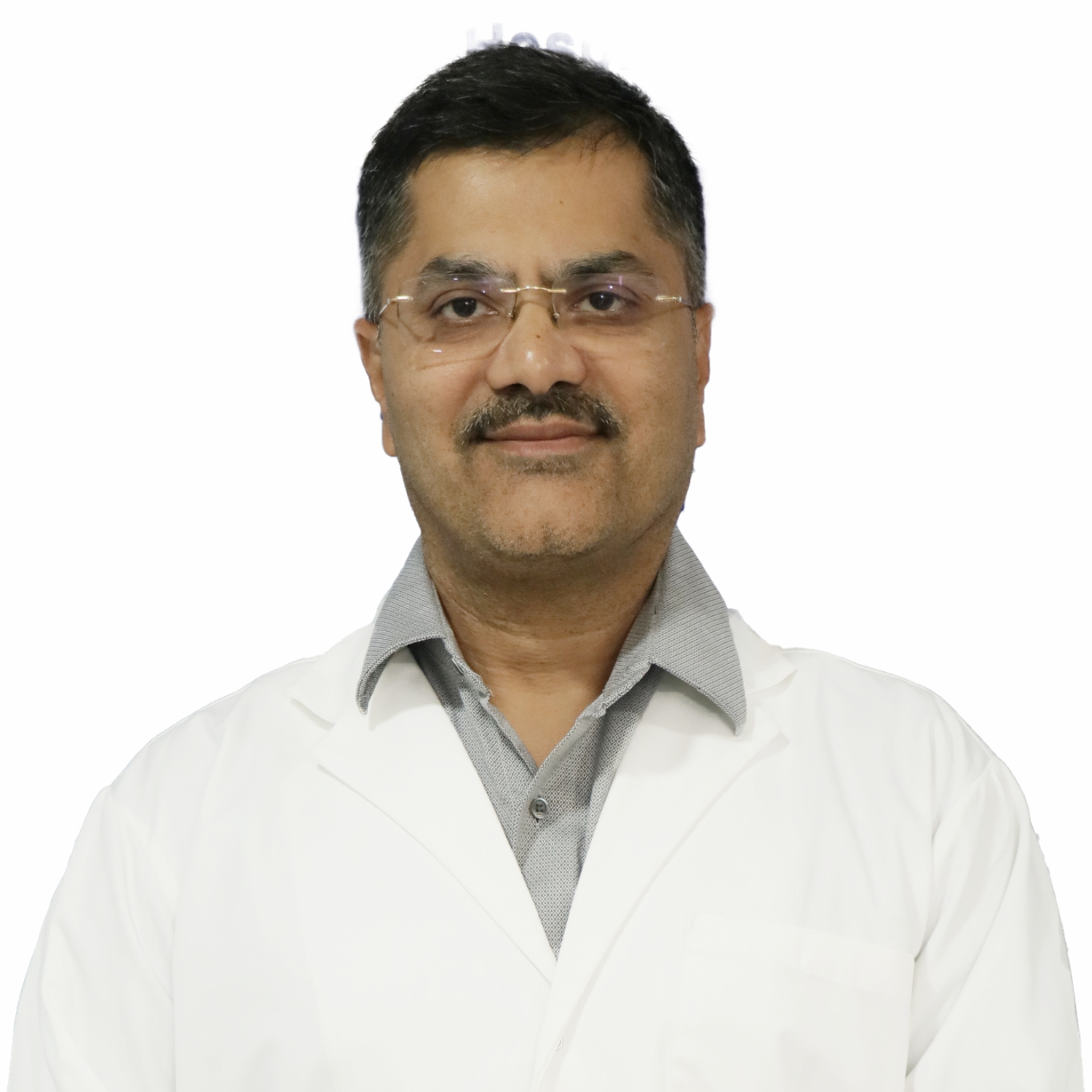
Director Dr. Dipak P. Joshi has more than 25 years of experience in urology and leads the urology department at Marengo Asia Hospital in Ahmedabad. His training took him through general surgery in Baroda and then urology at the Institute of Kidney Disease and Research Centre (IKDRC) in Ahmedabad, which is known for kidney care and transplantation. Problems of the kidney, bladder, and urinary passage are hard to talk about and easy to postpone, and many patients arrive after months of putting up with symptoms. Urology Doctor Dipak P. Joshi in Ahmedabad makes room for those conversations, and he explains what is wrong, what the choices are, and what each one involves, in plain words.
Qualifications
- MBBS, Baroda Medical College, M.S. University (1991 to 1996)
- MS (General Surgery), Baroda Medical College (1996 to 2000)
- DNB (Urology), IKDRC, Civil Hospital, Ahmedabad (2002 to 2005)
Areas of Expertise
- Endourology
- Laparoscopic Urology
- Kidney Transplant Surgery
- Laparoscopic Donor Nephrectomy
- Laparoscopic Partial Nephrectomy
- Radical Cystectomy
- Complex Fistula Repair (Vesicovaginal and Prostate-Rectal)
Where Urology Begins and Ends
Urology covers the kidneys, the tubes that carry urine, the bladder, the prostate, and the male reproductive organs. A urologist treats stones, infections, blockages, growths, and injuries, and some, like Dr. Joshi, also perform kidney transplants. If you have been looking for a Urology Doctor in Ahmedabad, the first step is a proper assessment of what is going on. Many urinary problems are treated with medicines and simple changes, and surgery is advised only when it is likely to help.
What Your First Visit Involves
A consultation with Dr. Dipak P. Joshi begins with a conversation about your symptoms, how long you have had them, how much you drink, your medical history, earlier operations, and the medicines you take. A physical examination follows. Depending on what is found, urine tests, blood tests, an ultrasound, a CT scan or other tests may be suggested. Please bring your earlier reports, scans and films, and a note of how often you pass urine, including at night.
When the Kidneys Are Failing
When the kidneys can no longer clear waste from the blood, treatment options are dialysis or a kidney transplant. Dialysis does part of the kidney’s work, usually several times a week, while a transplant gives many patients a way to live without it. Which option is right depends on your age, general health, the cause of kidney failure, and your wishes. A urologist who performs transplants can explain both paths, and also whether a transplant is realistic for you.
Kidney Transplant, Step by Step
A kidney transplant begins with a full assessment of the patient, including the heart, lungs, infections, and blood group matching. The new kidney comes from a living donor, often a relative, or from a deceased donor. The operation places the new kidney in the lower abdomen and connects it to the patient’s blood vessels and bladder. After the operation, medicines that stop the body from rejecting the kidney are needed for life, and regular blood tests and visits are essential. Ask the team about the donor assessment, the risks for both patient and donor, and what life looks like after a transplant.
Being a Living Kidney Donor
A healthy person can live a normal life with one kidney, but donation is a major decision and an operation. Donors go through detailed medical checks, counselling, and a legal process under Indian law, including approval by an authorisation committee. Their safety is always the priority, and donation must be voluntary. Many donor operations are now done with keyhole surgery, which can mean smaller cuts, less pain and a quicker recovery. Ask about the risks, the recovery time, and the follow-up that donors need.
Life After a Transplant
After a transplant, you will be asked to take anti-rejection medicines exactly on time, and never to stop or change them without advice. Protect yourself from infection by washing hands, avoiding sick contacts, and keeping vaccinations up to date as advised. Drink enough water unless told otherwise, avoid painkillers and herbal remedies without asking, and keep your blood pressure and sugar in range. Report fever, pain or swelling over the new kidney, a drop in urine, or any new symptom early, since early treatment makes a real difference.
Stones in the Kidney and Ureter
Stones form when minerals in the urine clump together. A small stone may pass on its own, but others cause severe pain that comes in waves from the back to the lower abdomen, with nausea, vomiting, burning with urination, or blood in the urine. Drinking plenty of water throughout the day is the most useful habit to prevent stones. Treatment depends on the size and position of the stone. Do not ignore repeated stone pain, and seek help urgently for pain with fever or when you cannot pass urine.
Treatment Through the Natural Passage
Endourology uses thin instruments with a tiny camera, passed through the natural urinary passage to reach stones, blockages or growths, so there is no large cut. It is commonly used for stones in the kidney, ureter and bladder, and for narrowings and certain growths in the bladder or prostate. Recovery is often quicker, and the hospital stay shorter. A thin tube called a stent may be left in for a short time. Your doctor will explain whether this approach suits you and what the risks are.
Keyhole Surgery in Urology
In laparoscopic surgery, the surgeon works through a few small openings using a camera and fine instruments. In urology, it may be used to remove or repair part of the kidney, to remove a kidney for donation or disease, or to correct a blockage between the kidney and the ureter. For suitable problems, it can mean less pain, smaller scars, and a faster return to normal life. It is not right for every case, and sometimes open surgery is safer, so your surgeon will tell you honestly which approach is better.
Growths in the Kidney
Many kidney growths are found by chance on a scan done for another reason. Some are harmless cysts, while others are solid and need further tests. For some small growths, surgery can remove the tumour and spare the rest of the kidney, which is called partial nephrectomy. This protects kidney function, and it can be done through keyhole surgery in selected patients. Larger or more complex growths may need removal of the whole kidney. Your doctor will explain what the scan shows, the options, and the risks.
Bladder Problems and Bladder Cancer
Blood in the urine, even once and even without pain, always needs a check, since one cause is a growth in the bladder. Other signs include burning, urgency, and frequent infections. Bladder cancer is diagnosed through a camera test of the bladder and a sample, and some are treated by removing the growth through the natural passage. When the cancer has grown into the bladder wall, radical cystectomy, which is removal of the bladder, may be advised, with a new way created for urine to leave the body. It is a major operation, and your surgeon will explain the options for the new urinary route, the risks, and the recovery.
Fistulas Between Organs
A fistula is an abnormal connection between two organs. A vesicovaginal fistula links the bladder and the vagina and causes constant leaking of urine, and a fistula between the prostate or urinary passage and the rectum can cause urine or air in the stool or repeated infections. These conditions can be distressing and isolating, but they can often be repaired with surgery by an experienced team. If you or a family member has this problem, please do not suffer in silence. Seek an assessment, since repair is often possible, and bring all your earlier reports and operation notes.
Prostate and Urine Flow Problems
A weak or interrupted stream, rushing to the toilet, waking several times at night, and a feeling that the bladder is never empty are common in men as they age and are often linked to an enlarged prostate. Medicines help many men, while others need a procedure. Do not delay if you cannot pass urine at all, since this is an emergency. A blood test and an examination are used to check the prostate. Ask your doctor about the benefits and limits of each option.
Getting Ready for Urological Surgery
If surgery is advised, your doctor will explain why it is needed, how it is done, what the risks are, and what recovery involves. Bring all your earlier scans, reports and prescriptions, and a full list of your medicines, especially blood thinners and diabetes medicines, since some must be adjusted. You will be told when to stop eating and drinking, and which tests to do beforehand. Arrange for someone to take you home and plan some rest afterwards. Ask every question you have, since understanding the plan helps you feel steadier.
Healing and Follow-Up
After surgery, you rest in a recovery area where staff watch your breathing, comfort, and urine output. A catheter or stent may be placed for a short time, and a little burning or blood in the urine is common for a few days. Drink plenty of fluids unless told otherwise, take your medicines as prescribed, and avoid heavy lifting for the period advised. If you were treated by Dr. Dipak P. Joshi, keep every follow-up visit, since catheters and stents need to be removed or checked at the right time.
Learning, Teaching and Conferences
Beyond the operating theatre, he has taken part in more than 50 national and international urology conferences and is involved in academic work. Urology is a field in which techniques change quickly, and regular exposure to new methods helps a surgeon decide what to offer and what to avoid. For patients, this means that the advice they receive is checked against current practice.
Urgent Urinary Problems
Go to the nearest emergency department straight away if you cannot pass urine at all, have severe pain in the side or lower abdomen that does not ease, fever with chills and back pain, heavy bleeding or clots in the urine, or sudden swelling and pain in the testicles. After a transplant, contact the team promptly for fever, a drop in urine, pain or swelling over the new kidney, or any sign of infection. Do not wait for an OPD day.
Booking an Appointment
To book a consultation with Dr. Dipak P. Joshi at Marengo Asia Hospital in Ahmedabad, visit during OPD hours from Monday to Saturday, 9:30 am to 11:00 am and 2:00 pm to 4:00 pm. Please bring your earlier scans, reports, discharge summaries, and prescriptions, along with a list of all the medicines and supplements you take.