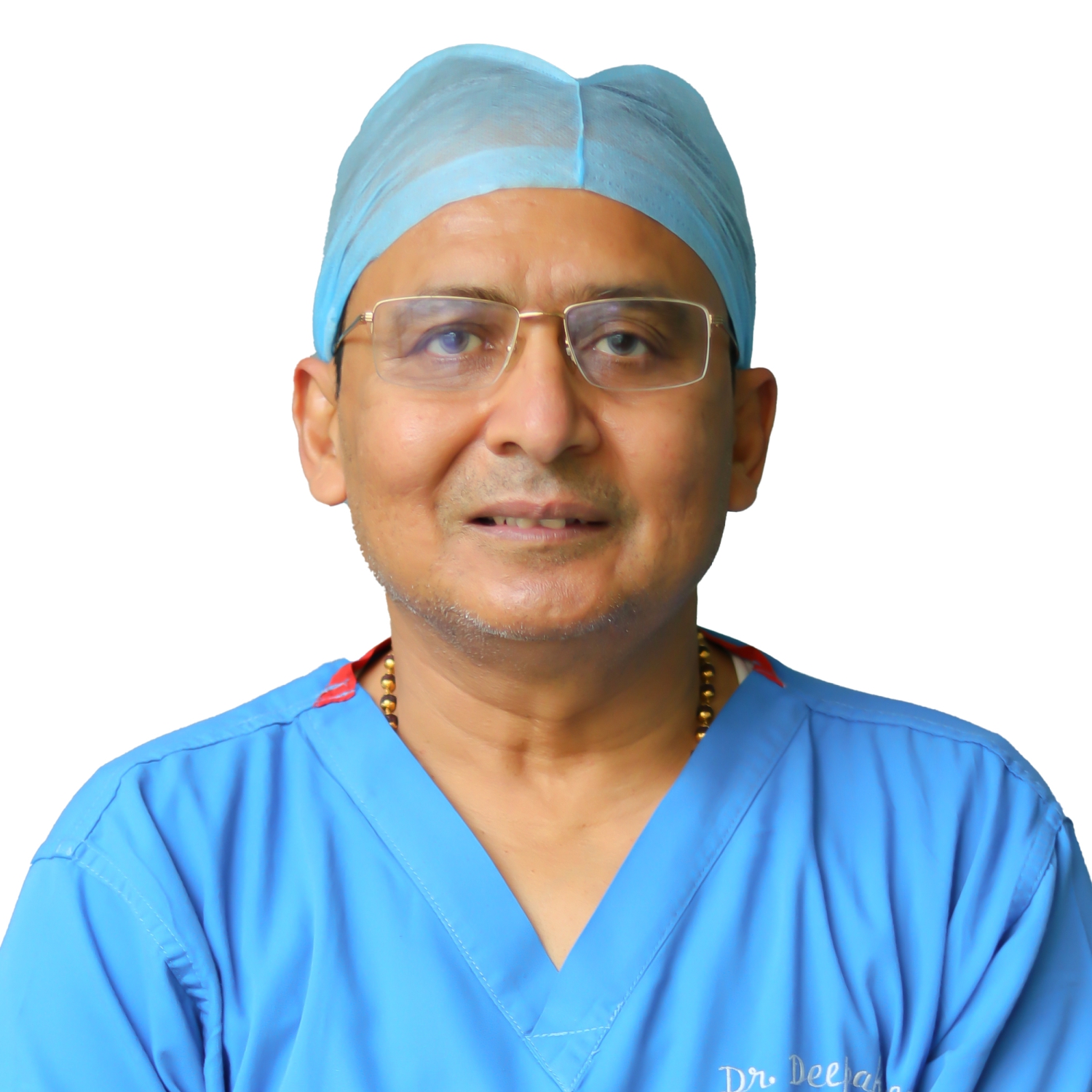
Consultant Dr. Dipak Arvindbhai Desai has more than 30 years of experience in anaesthesia and pain medicine, and he leads non-cardiac anaesthesia at Marengo Asia Hospital in Ahmedabad. He also teaches on the hospital’s DNB anaesthesia programme. Most people meet their anaesthesiologist only minutes before an operation, so it is easy to forget how much of the day rests on that doctor. Anesthesiologist Dipak Arvindbhai Desai in Ahmedabad also runs pain procedures for people who have lived with pain for months or years, and he explains both sides of his work, before surgery and in the pain clinic, in plain words.
Qualifications
- MD (Anaesthesia)
- DA (Anaesthesia)
Areas of Expertise
- Anaesthesia for Critically Ill and Cardiovascular-Compromised Patients
- Organ Transplant Anaesthesia
- Anaesthesia for High-Risk and Complex Cases
- Neuroanaesthesia
- Thoracic and Vascular Anaesthesia
- Paediatric and Neonatal Anaesthesia
- Chronic Pain Management
- Interventional Pain Procedures
- Ultrasound-Guided Regional Blocks
- Fibre-Optic Intubation
- Teaching and Guiding the DNB Anaesthesia Programme
Academic Roles and Contributions
- Faculty at many national and international conferences
- Live workshops in anaesthesia and pain medicine
- Teacher and examiner for the DNB anaesthesia examination
- Research comparing two doses of intrathecal morphine for pain relief after total knee replacement
Professional Memberships
- Life Member, Indian Medical Association
- Indian Society for the Study of Pain
- Indian Society of Anaesthesiologists
- American Society of Anesthesiologists
Medical Registration Number
The Doctor You Meet Before Surgery
An operation is a team effort, and the anaesthesiologist is the member who keeps you asleep, comfortable, and safe from the first minute to the last, and then manages your pain as you wake up. If you are looking for an Anesthesiologist in Ahmedabad, remember that you will usually meet this doctor through your surgeon or the hospital where the operation is planned. It is worth asking whether an experienced anaesthesiologist will see you before surgery, since a calm conversation at that stage can change how you feel on the day.
Your Pre-Anaesthesia Check
A visit with Dr. Dipak Arvindbhai Desai before an operation begins with a conversation about your health, your earlier operations and anaesthetics, any problems you or your family have had with anaesthesia, your allergies, habits and every medicine you take. He will examine you, check your airway and review your blood tests, ECG, scans and other reports. The plan is then made around you, including the type of anaesthesia, the pain relief and which medicines to continue or pause. Bring all your reports and a list of your medicines, including supplements.
When the Body Is Already Under Strain
Some patients arrive for surgery already seriously ill, with a weak heart, severe lung disease, kidney or liver failure, serious infection or injuries from an accident. Anaesthesia for these patients is planned with extra care, using closer monitoring, carefully chosen medicines and a team ready to support the heart, breathing and blood pressure. Ask your doctors to review your heart and lung reports before surgery, and tell them about every condition you have. Good planning is what makes complex operations safer.
Anaesthesia Around Organ Transplants
Transplant surgery brings its own challenges. Patients with failing kidneys or livers may have fluid, clotting and blood pressure problems, and the operation itself can involve large shifts in blood flow. The anaesthesia team works closely with the transplant surgeons and physicians to keep the circulation stable, protect the new organ and manage bleeding. Donors also need careful anaesthesia and pain control. If you or a family member is preparing for a transplant, ask about the anaesthesia plan, along with the surgical one.
Anaesthesia for Brain, Chest and Blood Vessel Surgery
Neurosurgery, chest surgery and vascular surgery each place special demands on anaesthesia. In brain surgery, the aim is to keep the brain calm and well supplied with blood. In some operations, the patient may be awake for part of the procedure, so that the surgeon can check speech and movement. In chest surgery, it may be necessary to let one lung rest while the other does the work, which is called one-lung anaesthesia. In vascular surgery, blood pressure and flow are managed with great care. Each plan is explained to the patient beforehand.
Children and Newborns
Children are not small adults, and anaesthesia for a baby or child is planned around age, weight and health, with equipment sized for small bodies. Parents are told exactly what to expect, including fasting times, and can help by explaining the day in simple, honest words and bringing a favourite toy or blanket. Newborns who need surgery are cared for by a team trained for their very small size and delicate physiology. Tell the team about allergies, recent colds and any family history of anaesthesia problems.
Keeping the Airway Safe
For anaesthesia, a tube may need to be placed into the windpipe to protect the airway. In some patients, this is hard, for example because of a small mouth opening, a stiff neck, swelling or an earlier injury. Fibre-optic intubation uses a thin, flexible camera to guide the tube safely, often while the patient is awake and comfortable under local anaesthetic. If you have ever been told that you had a difficult airway, tell the team before any surgery and carry that record with you.
Blocking Pain Where It Starts
Ultrasound-guided regional blocks use sound-wave pictures to place local anaesthetic close to a nerve, so that part of the body is numb. They can be used for surgery on the arm, leg or abdomen, and for pain relief after surgery, often with less need for strong medicines. This can mean a clearer head and an easier recovery for some patients. Your doctor will explain whether a block suits your operation, how it feels and what the risks are, including temporary numbness and, rarely, nerve problems.
Pain Relief After an Operation
Pain after surgery is expected, but it should be controlled. Good plans combine several approaches, such as regional blocks, epidural pain relief, carefully chosen medicines and early movement, so that you can breathe deeply, cough and walk, all of which speed up recovery. Tell the nurses about your pain early instead of waiting for it to become severe. Pain relief for a knee replacement, for example, may use a medicine given into the spinal fluid or a nerve block, and your team will explain which one is planned for you.
When Pain Lasts Longer Than It Should
Chronic pain is pain that lasts more than about three months, and it can change the way a person sleeps, works, and feels. It may come from the spine, the joints, nerves, an old injury, an operation, or an illness such as cancer. A pain physician looks for the source, reviews your tests, and builds a plan that may include medicines, exercise, physiotherapy, counselling, and procedures. Avoid taking strong painkillers for months without review, and keep a diary of when the pain is worse and what helps.
Pain Procedures in Plain Words
Interventional pain procedures place medicine or energy precisely at the source of the pain, usually guided by X-ray or ultrasound. An epidural block delivers medicine close to the spinal nerves in the neck, upper back, or lower back, and it may be used for pain that spreads down an arm or leg. Radiofrequency ablation uses heat from a fine needle to quieten a nerve that carries pain signals, and a cooled version is used for some chronic knee pain. Nerve blocks may also be used for facial pain such as trigeminal neuralgia. Procedures are chosen after a careful examination and scans, and results vary from person to person, so ask what to expect and how long the effect might last.
Pain in Cancer
Pain in cancer can come from the tumour, from treatment or from other causes, and it is treatable in most people. Medicines are the first step. For some patients, particularly with pain from cancers in the upper abdomen, a block of a nerve bundle such as the coeliac plexus can reduce pain and the need for strong medicines. Good pain control improves sleep, appetite and quality of life. Ask your cancer team about a pain specialist early, and do not suffer in silence.
Getting Ready for Anaesthesia
Follow the fasting instructions exactly, since an empty stomach protects your airway. Take only the medicines you are told to take, and ask about blood thinners, diabetes medicines and blood pressure tablets. Stop smoking as early as you can, since it affects healing and breathing. Remove jewellery, dentures and contact lenses as advised. If you forget and eat or drink, tell the team honestly, even if it feels embarrassing, since the operation may need to be delayed for your safety.
After Anaesthesia
After an operation, you rest in a recovery area where staff watch your breathing, blood pressure, and pain. You may feel drowsy, thirsty, nauseated or cold, and these effects are treated. At home, arrange for someone to stay with you, and avoid driving, signing important papers, or drinking alcohol for 24 hours or as advised. After a pain procedure, you will be told how long to rest and what to watch for. If you were treated by Dr. Dipak Arvindbhai Desai, keep every follow-up visit and tell the team how the pain relief has worked.
Teaching the Next Generation
Teaching is a big part of his work. He guides doctors on the DNB anaesthesia programme at the hospital, has taught as faculty at conferences and live workshops, and has acted as an examiner. A doctor who teaches has to explain things clearly and keep up with new methods, which helps patients as well as students. If you are a young doctor interested in anaesthesia or pain medicine, ask the hospital about its programmes.
Warning Signs That Cannot Wait
Go to the nearest emergency department straight away after surgery or a pain procedure for difficulty breathing, chest pain, a fit, heavy bleeding, sudden weakness or numbness that is spreading, loss of control over urine or stool, severe headache with fever and neck stiffness, or a fever with redness or swelling at the site. After a spinal or epidural procedure, a severe headache that is worse when you sit up should also be reported promptly. Do not wait for an OPD visit.
Booking an Appointment
To book a consultation with Dr. Dipak Arvindbhai Desai at Marengo Asia Hospital in Ahmedabad, please contact the hospital to arrange a time. Please bring your earlier reports, scans, discharge summaries, and prescriptions, along with a list of all the medicines and supplements you take. For a pain consultation, a short note on where the pain is, when it began, and what helps or worsens it is very useful.