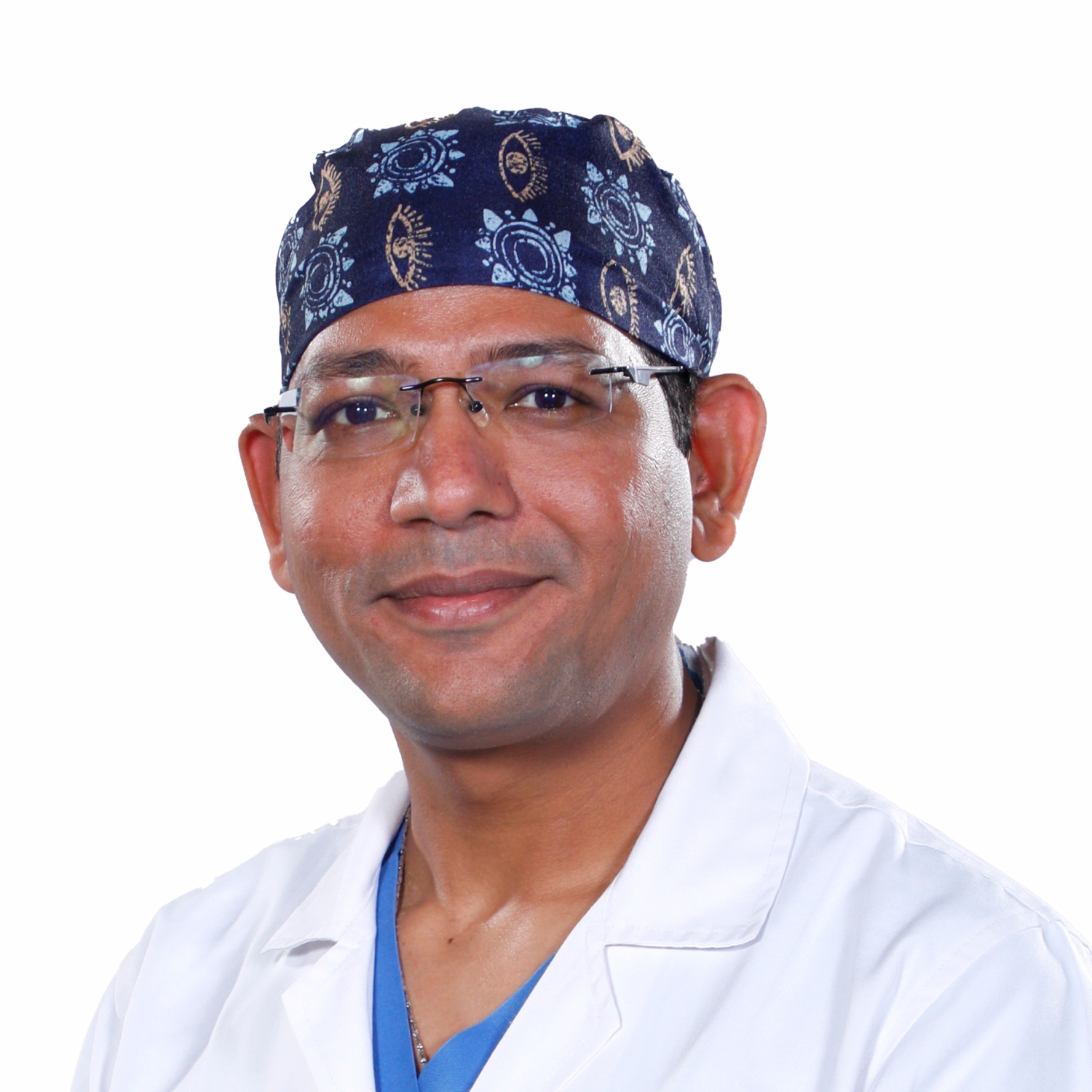
Many families first search for Heart Surgeon Chintan Sheth in Ahmedabad, so it helps to be clear about his role. He is not the surgeon who operates. He is the cardiac anaesthesiologist and critical care specialist who keeps the heart and body safe during the operation and looks after the patient in the cardiac ICU afterwards. Dr. Chintan Sheth has been a consultant at Marengo CIMS Hospital since December 2011, and has been in professional practice since 2006. His work spans routine and complex heart surgery, heart transplantation, and procedures in the cath lab, for both adults and children.
Qualifications
- MBBS
- DA
- DNB (Anaesthesiology)
- Fellowship in Cardiac Anaesthesia, Narayana Hrudayalaya, Bangalore
- FTEE (Fellowship in Transoesophageal Echocardiography)
- IACTA Travel Fellowship
Areas of Expertise
- Adult and Paediatric Cardiac Anaesthesia
- Cardiac Critical Care
- Heart Transplant Anaesthesia and Perioperative Management
- Heart Failure Management
- Transoesophageal Echocardiography (TEE)
- Mechanical Circulatory Support (IABP, ECMO, LVAD and RVAD)
- Anaesthesia for ASD, VSD and PDA Device Closures
- High-Risk Cath Lab Diagnostic and Interventional Procedures
- High-Risk Non-Cardiac Procedures in Patients With Heart Disease
- Ultrasound-Guided Regional Nerve Blocks, Fibre-Optic Intubation, Bronchoscopy and Percutaneous Dilatational Tracheostomy
Awards and Recognition
- Prof. Dr. Kumar Belani Award for topping the FTEE conducted by IACTA
- IACTA Travel Fellowship, UPMC and Allegheny General Hospital, Pittsburgh, USA (March 2016)
Professional Certifications
- IACTA Travel Fellowship
- FTEE (Fellowship in Transoesophageal Echocardiography)
- ACLS and BLS Provider Course (AHA curriculum)
- PALS (AHA standard)
Academic Involvement
He takes part regularly in national and state-level conferences, CMEs, workshops, and academic quizzes to keep his skills and knowledge up to date.
Medical Registration Number
G-35531
The Doctor Who Stays With You Through Heart Surgery
A heart operation is a team effort. The surgeon repairs the heart, the perfusion team runs the heart-lung machine, the nurses prepare and recover the patient, and the anaesthesiologist keeps the patient asleep, pain-free, and stable from the first minute to the last. A cardiac anaesthesiologist then continues the care in the ICU, when the body is at its most fragile. If you are looking for an expert Heart Surgeon in Ahmedabad, remember that the surgeon and the anaesthesia and critical care team work together, and it is worth asking about both when you choose a centre.
Before the Operation
A visit before heart surgery or a heart procedure is usually a conversation about your heart condition, your earlier operations, your medicines, allergies, any problems with anaesthesia in the past, and any family history of anaesthesia problems. Your reports, such as echo, angiography and blood tests, are reviewed, and a plan for your anaesthesia is made around your heart. You will be told when to stop eating and drinking, and which medicines to continue or pause. Ask any questions you have, since a clear idea of the day helps you feel steadier.
What Happens in the Operating Theatre
During heart surgery, you are fully asleep and carefully monitored. Lines in your veins and arteries and a breathing tube allow the team to follow your blood pressure, heart rhythm, oxygen level, and breathing beat by beat. When the heart is stopped or supported by a heart-lung machine, the anaesthesia team manages your blood pressure, blood flow, temperature and clotting to protect the brain and organs. A transoesophageal echo probe may be used to look at the heart as the operation goes on.
Looking Inside the Heart With TEE
Transoesophageal echocardiography (TEE) places a thin ultrasound probe in the food pipe, right behind the heart, to give very clear pictures of the valves, chambers and blood flow. During surgery, it helps the team check whether a repair has worked, whether the heart is pumping well and what fluid or medicine the heart needs. Outside the operating theatre, TEE may be done to look for clots or infection on valves. It is done with sedation or anaesthesia, and you are asked to fast beforehand.
The First Hours in Cardiac ICU
After heart surgery, patients are cared for in a cardiac ICU, where monitors track the heart rhythm, blood pressure, oxygen level, and breathing around the clock. Some patients are on a breathing machine for a short time, and the team gradually lowers support as the body recovers. Pain control, kidney function, bleeding, and rhythm are watched closely. Seeing a loved one with tubes and machines can be frightening, but each one has a purpose. Ask the team how often updates are given, and nominate one family member to receive them.
Children and Heart Surgery
Children are not small adults, and anaesthesia for a child with a heart problem is planned around the child’s age, weight and the type of heart condition. Parents are often anxious, and it helps to be told clearly what will happen on the day, including fasting times and what to bring. A favourite toy or blanket can comfort a child, and explaining the day in simple, honest words helps. Your team will tell you where parents can wait and when you can see your child after the operation.
Anaesthesia for ASD, VSD and PDA Closure
Some holes in the heart or vessels, such as an atrial septal defect (ASD), a ventricular septal defect (VSD) or a patent ductus arteriosus (PDA), can be closed with a device passed through a blood vessel, instead of open surgery. These procedures still need anaesthesia, since the child or adult must stay still while the device is placed, and echo is often used for guidance. Anaesthesia for these procedures is planned carefully around the heart condition. You will be told how long to fast and what to expect when you wake.
Heart Failure and When the Heart Needs Help
Heart failure means the heart is not pumping as well as the body needs. It can cause breathlessness, tiredness, swelling in the legs and difficulty lying flat. Many people are managed well with medicines, salt control, fluid advice and regular follow-up. When the heart is very weak, advanced options are considered, such as devices that support the heart or a heart transplant. Tell your doctor early if your breathlessness is worse, your ankles swell or you gain weight quickly.
Mechanical Support for a Failing Heart
Mechanical circulatory support can take over some of the heart’s work for a time. An intra-aortic balloon pump (IABP) helps the heart pump by inflating and deflating a balloon in the main artery. ECMO supports both the heart and lungs by pumping blood through a machine that adds oxygen. Ventricular assist devices (LVAD and RVAD) assist the left or right side of the heart for longer periods. These are used in very ill patients, as a bridge to recovery or to a transplant. They need an experienced ICU team, since bleeding, clotting and infection must be watched closely.
Heart Transplant From the Anaesthesia and ICU Side
A heart transplant is one of the most complex operations in medicine, and its success depends on a whole programme, including surgeons, cardiologists, anaesthesiologists, intensivists, nurses, nutritionists and coordinators. Dr. Sheth is Co-Director of the Heart Transplant Program at the hospital. His part includes anaesthesia during the transplant and the early critical care afterwards, when the new heart must be supported and the patient closely watched. He has experience in managing 70 heart transplant recipients. After a transplant, patients take medicines to prevent rejection, usually for life, and follow-up is regular.
Home Milrinone Therapy
Milrinone is a medicine that helps weak hearts pump better, and it is usually given through a drip in hospital. For some carefully selected patients with advanced heart failure, it can be continued at home under supervision. This needs training for the family, a clean setup, regular checks, and a clear plan for what to do if something goes wrong. It is not right for everyone, so ask your team whether it suits your situation and what support is available.
Cath Lab Procedures for High-Risk Patients
The cath lab is where doctors look at the heart’s vessels and valves and treat blockages and other problems through thin tubes. Some patients are so unwell, with a weak heart, severe valve disease, or a recent heart attack, that even a short procedure needs a cardiac anaesthesiologist. The anaesthesia team keeps blood pressure and rhythm stable and is ready to give extra support if needed. Tell the team about every medicine you take and every earlier procedure.
When a Heart Patient Needs Another Operation
People with heart disease sometimes need surgery on other parts of the body, such as a hip fracture, gallbladder, or hernia operation. Anaesthesia carries more risk when the heart is weak, so planning matters. The team reviews your heart tests, adjusts medicines, chooses the safest technique and may use closer monitoring. Do not stop heart medicines before such surgery unless you are told to. Bring all your heart reports, and tell the surgeon and the anaesthesiologist about your heart condition.
Pain Relief and Airway Skills
Ultrasound-guided nerve blocks use sound waves to place local anaesthetic close to a nerve, which can reduce pain after surgery and the amount of strong medicine needed. Fibre-optic intubation uses a thin, flexible camera to place a breathing tube safely when the airway is difficult. Bronchoscopy allows the airway to be checked, and a percutaneous dilatational tracheostomy is a bedside procedure that places a small breathing tube in the neck for patients who need a ventilator for longer. Each is chosen for a specific reason, and your doctor will explain why.
Getting Ready and Going Home
Before a heart operation, stop smoking, stay as active as your doctor allows, and take your medicines exactly as advised. Bring all your reports, scans and prescriptions, and a list of your medicines. Plan for family support at home during recovery. After you leave the hospital, you will be told about wound care, medicines, activity, diet, and follow-up visits. If you were treated by Dr. Chintan Sheth, keep every follow-up visit and bring your questions.
Heart Symptoms That Cannot Wait
Go to the nearest emergency department straight away for chest pain, severe breathlessness, fainting, a very fast or very slow heartbeat, sudden weakness on one side of the body, or trouble speaking. After surgery, contact the team promptly for increasing breathlessness, chest pain, fever, redness or discharge from the wound, or rapid weight gain with swelling. Do not wait for an OPD day.
Booking an Appointment
To book a consultation with Dr. Chintan Sheth at Marengo CIMS Hospital in Ahmedabad, visit during OPD hours from Monday to Friday, 9:00 am to 5:00 pm. Teleconsultation is not available, so please come in person. Bring your earlier heart reports, echo and angiography records, discharge summaries and prescriptions, along with a list of all the medicines and supplements you take.