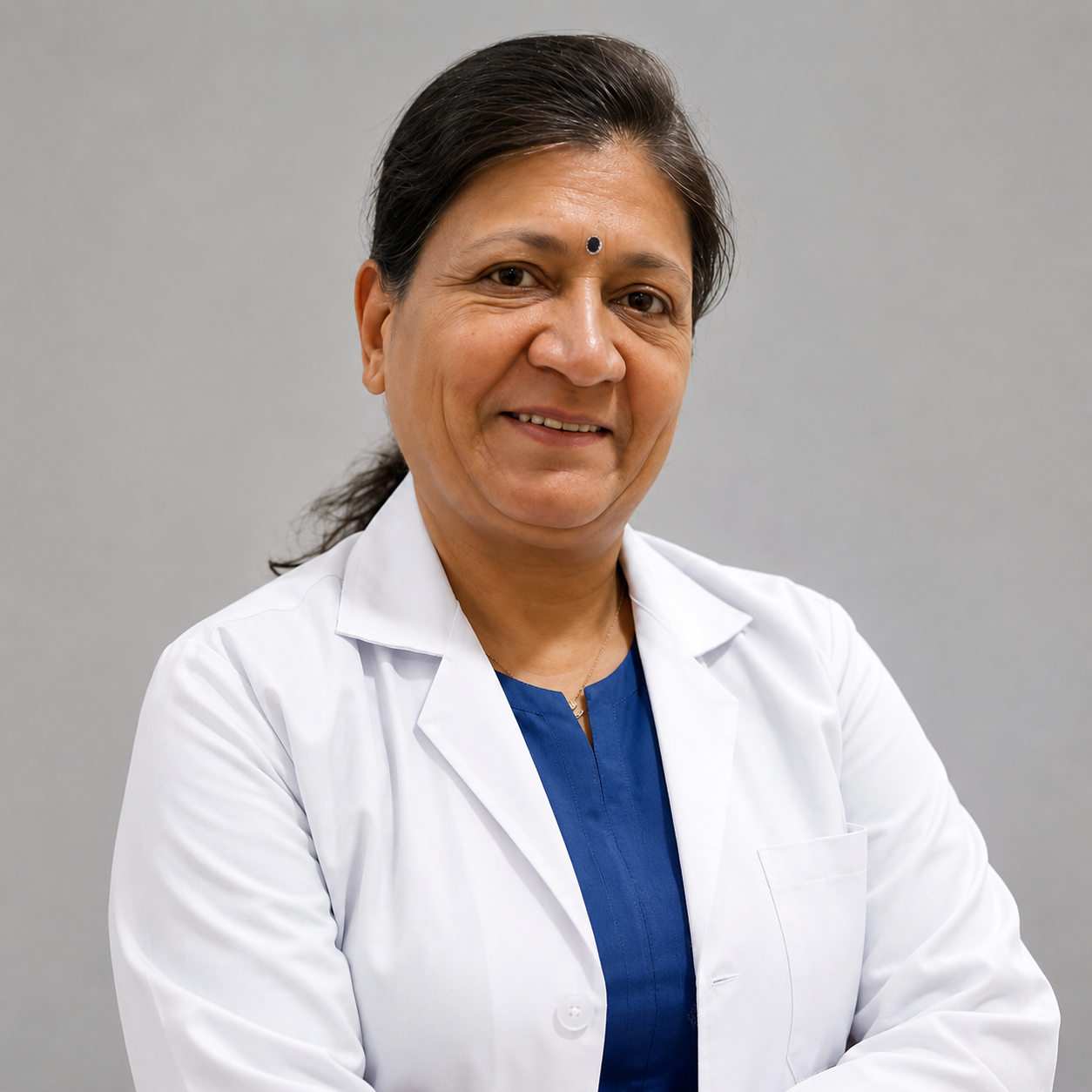
Senior Consultant Dr. Bina Shah Ophthalmologist in Vadodara brings almost 30 years of experience in eye care. She is an esteemed ophthalmologist, known for her expertise in diagnosing and treating eye conditions. Her commitment to patient care and advanced treatment techniques contributes to good vision outcomes and patient satisfaction. Eye problems can be worrying, so she focuses on explaining what is happening in simple words and making sure each patient understands the plan.
Qualifications
Areas of Expertise
- Ophthalmology
- Diagnosis and Treatment of Eye Conditions
- Advanced Eye Care
What Is an Ophthalmologist?
An ophthalmologist is a medical doctor who specialises in eye care. This includes testing your vision, diagnosing eye diseases, prescribing glasses, contact lenses, and medicines, and performing eye surgery when it is needed. An optometrist or optician can check your eyesight and fit glasses, but an ophthalmologist can also diagnose and treat diseases of the eye. If you are looking for an Ophthalmologist in Vadodara, this is the doctor to see for any new eye symptom, worsening, or not settling.
What Happens at an Eye Consultation
A visit with Dr. Bina Shah Ophthalmologist begins with a conversation about your symptoms, how long you have had them, your medical history, any eye problems in your family, and the medicines you take. Your vision is then tested, and the eyes are examined carefully. Drops may be used to widen the pupils for a closer look at the back of the eye, which can blur your vision for a few hours, so avoid driving afterwards and consider bringing someone with you. Further tests may be suggested depending on what is found. The aim is to explain the problem and your options clearly.
Eye Symptoms: When to See a Doctor
Blurred or cloudy vision, difficulty seeing at night, glare around lights, frequent changes in glasses power, eye pain, redness, watering, itching, dryness, and headaches linked to reading or screen use are all worth getting checked. Do not put home remedies or old eye drops in your eyes, and do not use steroid drops without advice, since they can cause serious harm. Seek help immediately for sudden loss of vision, flashes of light, a curtain or shadow across your sight, a painful red eye, or any injury to the eye.
Eye Care for Children
Children often do not realise that they cannot see well. Signs to watch for include sitting very close to the screen, squinting, rubbing the eyes, tilting the head, headaches, poor school performance and an eye that seems to turn inwards or outwards. Early checks matter because some problems are easier to correct while a child is young. Limit screen time, encourage outdoor play, and book a routine eye test if there is a family history of glasses or eye problems.
Diabetes, Age and Your Eyes
People with diabetes can develop changes in the back of the eye without any symptoms at first, so a yearly dilated eye check is important, even if your vision seems fine. After the age of 40, the chance of conditions such as cataract, glaucoma, and age-related changes rises, and glaucoma in particular can damage sight silently. Regular check-ups help to catch these problems early, when treatment works best. Keep your blood sugar and blood pressure under control, as this protects your eyes too.
Looking After Your Eyes Every Day
Take regular breaks from screens by looking at something far away every 20 minutes, and blink often. Wear sunglasses outdoors and eye protection during work or sports that carry a risk of injury. Eat a balanced diet with plenty of green vegetables and fruit, avoid smoking, and never share eye drops, towels, or make-up. Keep your glasses prescription up to date, since the wrong power can cause strain and headaches.
After an Eye Procedure: Recovery and Going Home
After an eye procedure, you rest for a short time while the team checks your eye and comfort. Before you go home, you will be told how to use your eye drops, how to protect the eye, and what to avoid for a few days, such as rubbing the eye, swimming, and dusty places. Wash your hands before using drops and take your medicines exactly as prescribed. If you were treated by Dr. Bina Shah in Vadodara, attend every follow-up visit, even if the eye feels fine.
Booking an Appointment
To book a consultation with Dr. Bina Shah Ophthalmologist in Vadodara, visit during OPD hours from Monday to Saturday, 2:00 pm to 3:00 pm. Please bring your earlier reports, your current glasses, and your prescriptions, along with a list of all the medicines, eye drops, and supplements you take.