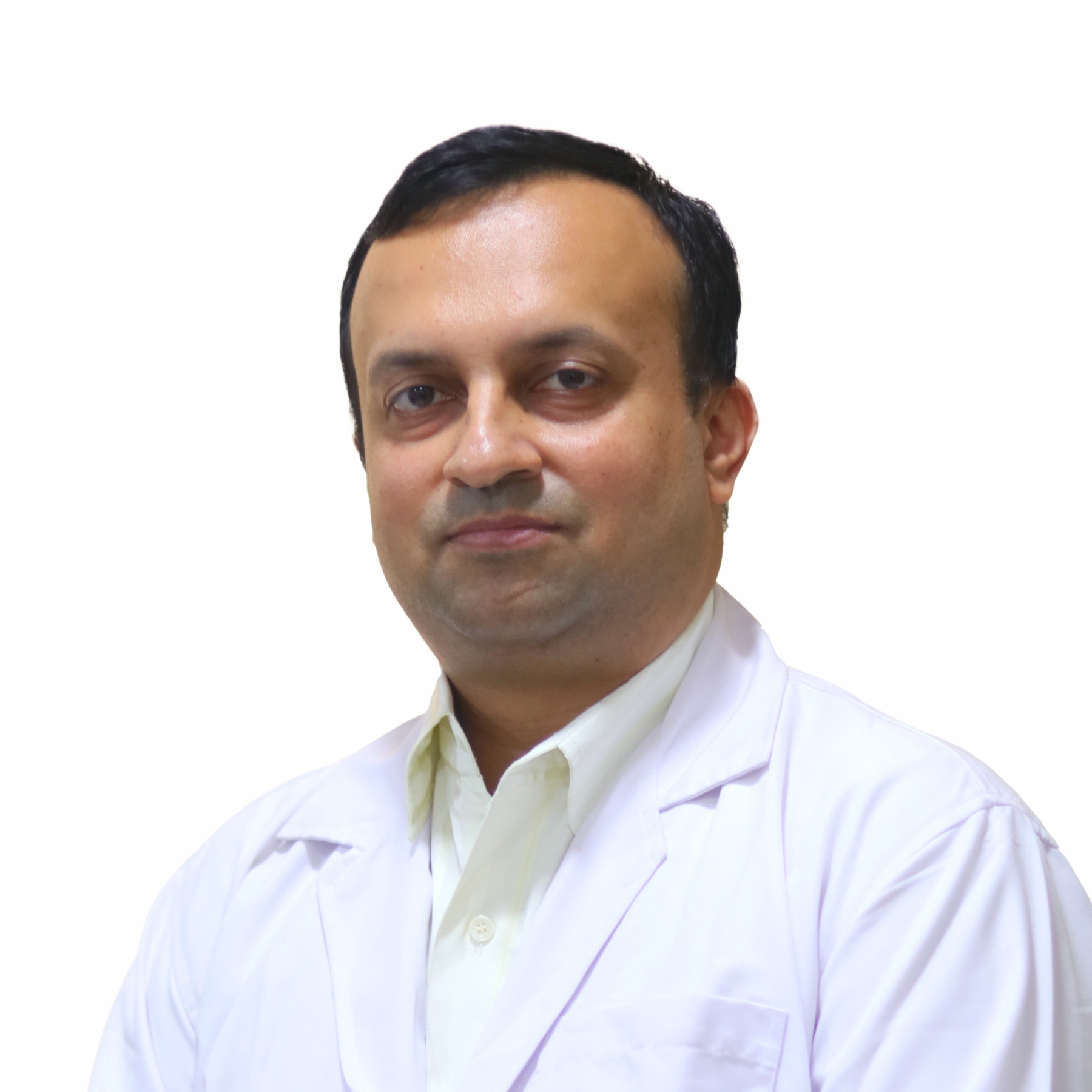
Head of Critical Care Dr. Bhagyesh Shah has 17 years of experience in intensive care, including work in ICU set-ups in India and Mauritius. At Marengo Asia Hospital, he has helped build comprehensive ICU management programmes, with care that runs from prevention and active treatment through rehabilitation and, when needed, palliative support. A family member in intensive care turns every hour into a long one, and most people have never had to ask these questions before. Critical Care Doctor Bhagyesh Shah in Ahmedabad puts weight on telling families plainly what is happening, what the team is doing, and what to expect next.
Qualifications
- MBBS
- DA
- IDCCM
- Certificate in Infectious Diseases and HIV
- MBA (Healthcare Management)
- AHA-Certified BLS and ACLS Instructor
Areas of Expertise
- Perioperative Critical Care
- Obstetric Critical Care
- Respiratory Critical Care and ARDS Management
- Sepsis-Related Critical Care
- Critical Care Toxicology
- Difficult Airway Management
- Ultrasound-Guided Procedures
- ICU Administration and Management
- Safe Transport of Critically Ill Patients
- Home Healthcare, from Preventive to Palliative Care
Academic Roles and Contributions
- Faculty for AHA BLS and ACLS courses
- Teacher with ISCCM
- Author of chapters in ISCCM Update books, a textbook of critical care medicine, and a book on obstetric critical care
- Author of several publications in national and international journals
- Part of national and international critical care studies, including INDICAPS, ISOS, ICON, Intube ICU, DECUBE ICU, IMPRESS, FENICE, LUNG SAFE and WEAN SAFE
Medical Registration Numbers
When a Loved One Is in the ICU
Few moments are as frightening as a sudden call that someone you love has been moved to intensive care. If you have been typing Critical Care Doctor near me in Ahmedabad into a search box while sitting in a hospital corridor, the first thing to know is that the team treating the patient right now is what matters most. The next things to ask are simple. Who is the intensivist in charge, is a specialist available around the clock, how often will you receive updates, and who is your point of contact? Clear answers to these questions often tell you a great deal about how a unit works.
Meeting the Intensivist
A meeting with Dr. Bhagyesh Shah starts with the story so far. How and when the illness began, what treatment has been given, what operations or illnesses came before, which medicines the patient takes, and what allergies they have. Please bring all discharge summaries, scan films, blood reports, and a list of medicines. He will explain what the numbers and monitors mean, what the main problems are, what the team is doing about each and what the next 24 to 48 hours may bring. Ask for a family meeting whenever a major decision is due.
Intensive Care Around an Operation
Major surgery puts the body under stress, and patients with heart, lung, kidney, or diabetes problems, or very long operations, may need ICU care before or after. Perioperative critical care means planning for this in advance. Before surgery, the team can identify high-risk patients, adjust medicines, and arrange an ICU bed. After surgery, close monitoring catches problems such as bleeding, low blood pressure, breathing trouble, or infection early. If you are going for a major operation, ask the surgical team whether ICU care is planned.
When Pregnancy Becomes an Emergency
Most pregnancies and deliveries go smoothly, but some can turn serious, with heavy bleeding, very high blood pressure and fits (eclampsia), severe infection, heart or lung problems or complications during a caesarean. Obstetric critical care brings together obstetricians, anaesthetists and intensivists to look after both mother and baby. Warning signs in pregnancy or after delivery include heavy bleeding, a severe headache with blurred vision, fits, breathlessness, high fever and severe abdominal pain. These need immediate hospital care.
Failing Lungs and ARDS
Acute respiratory distress syndrome (ARDS) is a serious condition in which the lungs fill with fluid and inflammation, so that oxygen cannot enter the blood properly. It can follow pneumonia, severe infection, injury, or other illness, and it often needs a breathing machine. Treatment includes lung-protective ventilation, careful fluid management, lying the patient on the stomach for some hours a day in selected cases, and treating the cause. Weaning from the ventilator is done gradually and carefully, since rushing it can cause setbacks.
Sepsis, the Body’s Overreaction to Infection
Sepsis occurs when the body’s response to an infection starts to damage its own organs. It can follow pneumonia, a urinary or abdominal infection, a wound, or an infection in the blood. Signs include high fever or a very low temperature, fast breathing, a fast heartbeat, confusion, very low blood pressure, and passing little urine. It is an emergency, and each hour of delay matters. Treatment includes antibiotics, fluids, medicines to support blood pressure, finding and treating the source, and support for the failing organs.
Poisoning, Snakebite and Overdose
Poisoning can be accidental or deliberate, and it can involve pesticides, medicines, household chemicals, alcohol, snake or insect bites, and industrial substances. Critical care toxicology means rapid assessment, supportive care for breathing and circulation, and specific antidotes or treatments where they exist. If you suspect poisoning, take the patient to the nearest emergency department at once. Bring the container, the packet, or a photo of the substance, since this can help identify the treatment. Do not induce vomiting or give home remedies unless instructed by a doctor.
Airway Emergencies and Difficult Airways
In an emergency, securing the airway can save a life, and in some patients it is not simple, for example in those with a short neck, swelling, injury, obesity or a small mouth opening. Difficult airway management uses planning, special equipment such as video laryngoscopes and flexible scopes, and experienced hands. Tell your doctors before any surgery if you have had breathing tube difficulties in the past, and carry any record of it. In an emergency, call for help straight away and begin CPR if the person is not breathing.
Life Support Machines in Plain Words
ECMO (extracorporeal membrane oxygenation) is a machine that takes blood out of the body, adds oxygen, removes carbon dioxide, and returns it, giving the lungs or heart time to rest and recover. It is used in the sickest patients, when other treatments are not enough, and it needs a highly trained team and careful monitoring for bleeding and clotting. CRRT (continuous renal replacement therapy) is a slow, gentle form of dialysis that runs around the clock for patients whose blood pressure is too unstable for regular dialysis. Ask the team why a machine is being used, what it is expected to do, and for how long.
Care Around Transplants and Complex Illness
Patients who have had or are waiting for an organ transplant can become very unwell, since their immune systems are suppressed and infections can progress quickly. Critical care for these patients involves close monitoring, quick treatment of infection, careful medicine management and organ support when needed. The same approach applies to patients with failure of several organs at once, where the heart, lungs, kidneys and liver may all need support. Ask the team to explain which organs are affected and what is being done for each.
Moving a Very Sick Patient Safely
Transferring a critically ill patient between hospitals or within a hospital carries risk, because a patient who is stable in an ICU can deteriorate on the road. Safe transport needs a fully equipped ambulance, monitors, oxygen, a ventilator if needed, emergency medicines, and a trained doctor and nurse. Before a transfer, the team should stabilise the patient and share the case with the receiving doctor. Ask who will accompany the patient, and carry all reports and scan films.
Bedside Ultrasound and Procedures
Ultrasound in the ICU lets the doctor look at the heart, lungs, abdomen and blood vessels at the bedside, without moving the patient. It also helps place drips, central lines, and drains more accurately and safely, and can reduce complications. These tests are quick and use no radiation. The team will explain each procedure and ask for consent where possible.
Care That Runs From Prevention to Comfort
Good intensive care is more than the machines. It starts with preventing problems, such as infection, bedsores, clots and delirium, and it continues with active treatment, early mobilisation and rehabilitation. When a patient is unlikely to recover, it also means honest conversations and the best possible palliative care, with comfort and dignity. Families are part of this journey, and they should be told clearly what the goals of care are, and have a chance to ask questions at each stage.
Recovery After Critical Illness
Weakness, poor sleep, low appetite, memory and concentration problems, anxiety and low mood are common after a long ICU stay, and often improve with time and support. Physiotherapy, good nutrition, sleep, gentle activity and a calm routine all help. Before discharge, you will be told about medicines, follow-up visits and warning signs. If you were treated by Dr. Bhagyesh Shah, keep your discharge summary safe and attend all follow-up visits.
Care at Home After the ICU
Some patients need continued care at home, such as oxygen, tube feeding, wound dressings, injections or physiotherapy. Home healthcare lets this happen in familiar surroundings, with a trained team, set-up of equipment and regular review. Ask about what equipment and supplies are needed, who will visit, how often, and whom to call when something goes wrong. A written plan, with emergency numbers, helps families feel steadier.
Standing by the Bedside
Waiting in or outside an ICU is exhausting. Nominate one family member to receive updates and pass them on, so the team can spend more time on care. Wash your hands, follow the nurses’ guidance, speak softly, and keep visits calm. Look after yourself too, with food, water, and rest. Do not hesitate to ask questions, and ask the team to explain anything you do not understand. Gentle, familiar voices can comfort a patient, even when they are drowsy or sedated.
Consulting From a Distance
Teleconsultation is available with Dr. Bhagyesh Shah. It can be useful for follow-up after discharge, reviewing reports, and for a second opinion on a patient already in another hospital. A phone or video call cannot replace an examination or emergency care, and he may ask you to come in or to go to the nearest hospital. Please keep your reports, scan details, and medicine list ready before the call.
Do Not Wait for an Appointment
Go to the nearest emergency department straight away for severe breathlessness, chest pain, loss of consciousness, a fit, heavy bleeding, a serious injury, suspected poisoning, a very high fever with confusion, or very low blood pressure. For a person who is not breathing normally, start CPR if you know how and call for emergency help at once. In pregnancy or after delivery, heavy bleeding, fits, or severe headache need immediate care.
Booking an Appointment
To book a consultation with Dr. Bhagyesh Shah at Marengo Asia Hospital in Ahmedabad, visit during OPD hours from Monday to Saturday, 11:00 am to 5:00 pm. Critical care is also provided to admitted and emergency patients. Please bring your earlier reports, scans, discharge summaries, and prescriptions, along with a list of all the medicines and supplements the patient takes.