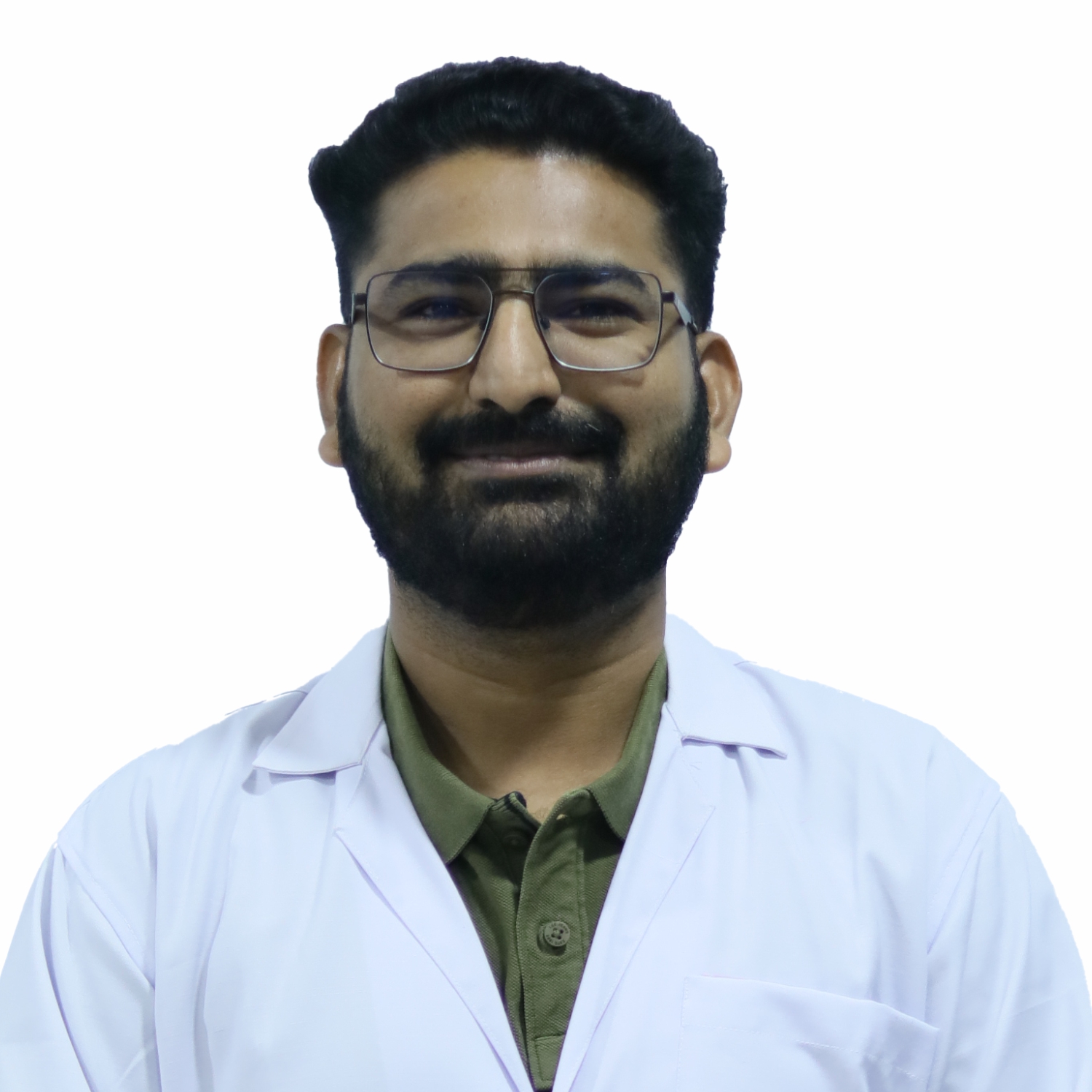
Consultant Dr. Anand Bhanupriya brings more than 7 years of experience in diagnostic imaging and image-guided procedures at Marengo CIMS Hospital in Ahmedabad. When your doctor advises a scan, waiting for the answer can be stressful, so you can have it done and reported by leading Radiology Dr. Anand Bhanupriya in Ahmedabad, who studies each image carefully and keeps the process clear from start to finish. He focuses on careful imaging and clear reports, and on helping you understand what to expect before you come in.
Qualifications
- MBBS, Government Medical College, Surat
- MD (Radiodiagnosis), Smt. NHL Medical College, Ahmedabad
Areas of Expertise
- Ultrasound (Neck, Thorax, Abdomen, Pelvis, Scrotum)
- Musculoskeletal Ultrasound
- Arterial and Venous Doppler Studies (Carotid, Abdominal, Upper and Lower Limb)
- Mammography
- Whole Body Radiography
- CT Scan (Head and Neck, Temporal Bone, PNS, Thorax, Abdomen, Joints)
- CT Angiography (Brain, Pulmonary, Abdominal, Upper and Lower Limb)
- USG-Guided Procedures
The Doctor Behind Your Scan Report
Most people never see the doctor who studies their scan, yet the report guides the diagnosis and the treatment plan. A radiologist is a medical doctor who reads X-rays, ultrasound, CT, and other images, recognises what is normal and what is not, and writes the report your treating doctor relies on. If you are looking for a Radiology Doctor in Ahmedabad, it helps to choose a centre where the images are reported carefully, compared with your earlier scans and explained clearly when you have questions.
Coming In for a Scan
Preparation depends on the test, so follow the instructions you are given when you book. Some ultrasounds need a full bladder or an empty stomach, some CT scans need fasting, and some need no preparation. Bring your doctor’s request, your earlier films, discs and reports, and wear loose clothing without metal. Tell the team if you are or may be pregnant, if you have allergies, kidney problems or diabetes, or if you have a pacemaker, implants or earlier surgery. A family member is welcome to come along.
Ultrasound Across the Body
Ultrasound uses sound waves, not radiation, and is painless. It is widely used to look at the neck, chest, abdomen, pelvis and scrotum, for example to check the thyroid, the liver, gallbladder, kidneys, uterus, ovaries, bladder, prostate or swellings. You may be asked to fast or to come with a full bladder, depending on the area. The scan usually takes 15 to 30 minutes, and a gel is applied to the skin. Tell the technician where you have pain, so that area can be looked at carefully.
Bones, Joints and Muscles on Ultrasound
Musculoskeletal ultrasound shows tendons, muscles, ligaments, nerves, and fluid around the joints in real time, and the doctor can move the joint while looking at the images. It is often used for shoulder, knee, ankle, and wrist pain, tendon problems, swellings, and sports injuries. Because it can be compared with the other side, it helps to show what is normal for you. Tell the team about your injury and where it hurts, and bring any earlier X-rays or MRI reports.
Doppler Studies and Blood Flow
A Doppler study uses ultrasound to see how blood flows through the arteries and veins. It may be advised for leg pain when walking, a swollen leg, varicose veins, slow-healing foot wounds, or to check the arteries in the neck and abdomen. It can show narrowing, blockage, or clots, and it involves no radiation or injections. Wear comfortable clothing that is easy to adjust. If a single leg suddenly becomes swollen and painful, do not wait for a scheduled scan, since this needs urgent medical attention.
Mammography for Breast Health
Mammography is a low-dose X-ray of the breast, used to look for changes that cannot be felt, and to investigate lumps, pain, or nipple discharge. The breast is gently pressed between two plates for a few seconds, which can be uncomfortable but is brief. Schedule it when your breasts are least tender, which is usually the week after your period, and avoid powder, deodorant or cream on the day. Tell the team about earlier scans, breast surgery, implants, or pregnancy. Bring your earlier mammograms, since comparison matters.
CT Scans of the Head, Neck, Chest and Joints
A CT scan takes many X-ray pictures to build detailed cross-sections of the body. It is commonly used to look at the head, neck, sinuses and temporal bone, and the chest, abdomen and joints. Scans are quick, often a few minutes on the table, and you will be asked to lie still and sometimes to hold your breath. Some scans use a contrast dye, so tell the team about allergies, kidney problems, and diabetes medicines beforehand. Scans that use X-rays carry a small amount of radiation, and they are advised only when the benefit outweighs the risk.
CT Angiography and the Blood Vessels
CT angiography uses contrast dye and a fast CT scan to show the blood vessels of the brain, lungs, abdomen, arms, and legs. It can reveal blockages, narrowing, clots, or bulges in a vessel, and it is often used in emergencies such as suspected stroke or a clot in the lungs. A thin tube is placed in a vein in your arm for the dye, which may give a warm feeling for a few seconds. Tell the team about kidney disease, allergies to dye or iodine, and diabetes medicines. Drink water afterwards unless you have been told otherwise.
Needle-Guided Procedures
Ultrasound-guided procedures use live imaging to guide a fine needle to the exact spot, whether to take a small tissue sample or to drain a fluid collection. Using imaging helps the doctor reach the right place and avoid nearby structures. The area is cleaned and numbed first, and you may feel some pressure. Tell the team about blood thinners, bleeding problems, and allergies, and follow the instructions on stopping or continuing medicines. Afterwards, you are watched for a short time and told which signs to watch for at home.
Understanding What Your Report Says
A scan report can be full of technical terms, and an unusual finding does not always mean illness. Many findings are normal variations or changes that only need watching. Go through the report with the doctor who requested the scan, since they know your symptoms and history, rather than searching online and drawing your own conclusions. Keep a copy of every report and image, since future doctors will want to compare them. If you want a second opinion, ask for the images as well as the report.
When You Should Not Wait for a Scan
Do not wait for a scan appointment if you have severe chest pain, difficulty breathing, sudden weakness or trouble speaking, a severe headache, heavy bleeding, a serious injury or severe abdominal pain. Go to the nearest emergency department straight away. If a scan was advised urgently by your doctor, bring the request and any earlier reports with you, and tell the team about your symptoms.
Booking an Appointment
To book a scan or consultation with Dr. Anand Bhanupriya at Marengo CIMS Hospital in Ahmedabad, visit during OPD hours from Monday to Saturday, 10:00 am to 5:00 pm. Please bring your doctor’s request, your earlier scans, films, discs, and reports, your prescriptions, and a list of the medicines and supplements you take.